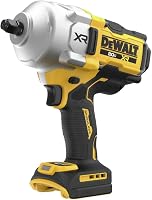
DeWalt DCF923 Impact Wrench Review: Worth It? (October 2026)
The DeWalt DCF923 suits buyers who use 3/8 in impact sockets and want a compact wrench with adjustable control. Choose the DCF921 instead if your work centers on 1/2 in sockets, or the DCF922 when secure socket retention matters more than frequent changes.
On this page (10 sections)
- Who should buy the DeWalt DCF923?
- What do the DCF923 torque figures mean?
- How do the DCF923 control features help?
- Should you choose a hog ring or detent pin?
- DCF923 vs DCF921, DCF913 and DCF922
- How should you set up the DCF923?
- Can the DCF923 remove car lug nuts?
- Which mistakes should DCF923 buyers avoid?
- How should you care for the DCF923?
- Should you buy the DeWalt DCF923?
The DeWalt DCF923 is a good fit for buyers who use 3/8 in impact sockets and want a compact wrench with adjustable fastening control. Choose it around your socket collection and regular jobs, rather than assuming that a larger drive would automatically give you more power.
Its main appeal is the mix of quick socket changes and control features. The DCF923B is a tool-only purchase, so a compatible battery and charger belong in your buying plan.
Who should buy the DeWalt DCF923?
Buy the DCF923 for repeat fastening and removal work with 3/8 in impact sockets, especially when you move between socket sizes. Skip it if most of your work already uses 1/2 in sockets or requires more loosening capability than this compact class offers.
DeWalt DCF923B ATOMIC 3/8 Inch Impact Wrench: Best for frequent socket changes
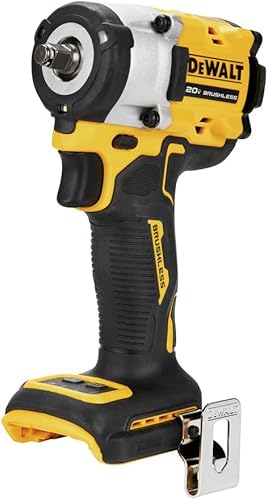
- 3/8 in hog ring anvil
- 4 speed settings
- Precision Wrench control
- Timber screw mode
Choose the DCF923 for jobs built around 3/8 in impact sockets, especially when you change sizes often and want more control over fastening. The tool-only package requires a separate compatible battery.
Pros
- Hog ring supports quick socket changes
- Precision Wrench control helps manage fastening
- LED has brightness control
Cons
- Does not directly accept 1/2 in sockets
- Battery not included
A useful starting point is your next 3 jobs. Note the socket sizes, room around each fastener and whether the work mostly involves removal, repeated assembly or careful tightening.
That tells you more than choosing by the largest torque number. A wrench that accepts your sockets directly and reaches the joint cleanly is easier to put to work.
Where the DeWalt DCF923 fits best
The DCF923 makes sense as a regular-use socket tool, rather than a purchase reserved for one badly seized bolt. Its hog ring favors jobs where changing sockets is part of the work.
Buyers who already have compatible batteries have a simpler path to a working setup. First-time cordless buyers should count the battery, charger and impact sockets as parts of the same purchase decision.
Skip it as a substitute for a torque wrench on joints with a required final torque. Control aids help manage the tool, but they don't measure the clamp load or verify the finished joint.
For a broader view of drive sizes, batteries and tool classes, start with our cordless impact wrench buying guide.
What do the DCF923 torque figures mean?
DeWalt claims up to 300 ft-lb of fastening torque and 450 ft-lb of breakaway torque for the DCF923. The first describes tightening capability; the second describes loosening capability.
These maximums aren't torque settings you can select. A speed setting also doesn't translate into a fixed amount of torque at the bolt.
Rust, thread condition, previous tightening and socket fit all affect removal. A fastener tightened to a known service torque may still need much more effort to loosen after corrosion or damage.
Choose around the work you do most often. If stubborn removal is your main reason for buying, compare tools intended for that workload rather than relying on a compact wrench's maximum claim.
For wheel jobs, our guide to impact wrench torque for lug nuts explains how to judge the requirement without confusing installation torque with removal effort.
How do the DCF923 control features help?
The DCF923 offers 4 speed settings, Precision Wrench control and timber screw mode to help manage different fastening tasks. DeWalt says Precision Wrench control helps prevent overtightening and fastener run-off.
Use the controls to approach the joint gradually. Start conservatively, keep the socket square and release the trigger as the fastener seats rather than continuing to hammer.
Precision Wrench control is useful when you want help managing the transition between running a fastener and seating it. It still leaves the operator responsible for choosing a suitable setting and stopping at the right point.
Timber screw mode is intended to optimize speed in wood. Match the screw, accessory and tool mode to the instructions, especially where the screw maker specifies an installation method.
Don't make speed your only goal on assembly work. Stripped threads or a damaged washer can take longer to fix than the time saved by driving a fastener harder.
The onboard LED has adjustable brightness for dim spaces. Aim the light at the joint before starting, and add a separate work light if the socket or nearby parts cast a shadow.
Should you choose a hog ring or detent pin?
Choose a hog ring for frequent socket changes and consider a detent pin when keeping the socket attached takes priority. The DCF923 uses a hog ring, while the DCF922 provides the detent-pin alternative here.
Fit each socket fully and confirm that it stays attached before positioning the tool. Remove the battery before inspecting the anvil or dealing with a socket that won't seat correctly.
Socket retention doesn't replace supporting the tool and controlling the work area. For angled or overhead work, think about where a released socket or loosened fastener could fall.
A detent pin can make removal less convenient, depending on the socket and pin arrangement. That trade-off matters if you change sizes every few fasteners.
Read our guide to friction ring and pin detent anvils before choosing, or see the DeWalt DCF961 review when widening your model shortlist.
DCF923 vs DCF921, DCF913 and DCF922
Choose these alternatives by socket fit, retention style and working priorities. The DCF921 is the closest match for a 1/2 in socket collection, the DCF913 puts more emphasis on lower tool weight, and the DCF922 favors socket retention.
| Model | Drive and anvil | DeWalt's claimed maximum torque | Main buying reason |
|---|---|---|---|
| DCF923 | 3/8 in hog ring | 300 ft-lb fastening; 450 ft-lb breakaway | Adjustable control with direct-fit 3/8 in sockets |
| DCF921 | 1/2 in hog ring | 300 ft-lb fastening; 450 ft-lb breakaway | Direct fit for a 1/2 in socket collection |
| DCF913 | 3/8 in hog ring | 250 ft-lb tightening; 400 ft-lb breakaway | Lower stated tool weight |
| DCF922 | 1/2 in detent pin | 300 ft-lb fastening; 450 ft-lb breakaway | Socket retention for angled assembly |
DCF923 vs DCF921: choose around your sockets
Pick the DCF921 if your impact sockets mostly use a 1/2 in drive. It shares the DCF923's claimed torque figures and named control features, so changing drive size here doesn't buy a higher stated output.
This makes the DCF921 a direct alternative for buyers with an established socket collection. Skip it if your usual work depends on 3/8 in sockets and you would need an adapter every day.
Adapters add length and another connection between the tool and fastener. Occasional use may be practical with suitable accessories, but direct fit is the cleaner buying choice for regular work.
DCF923 vs DCF913: decide whether weight or controls matter more
Consider the DCF913 if lower tool weight is your priority and its torque range suits the job. Its stated weight is 2.3 lb, compared with 2.8 lb for the DCF923.
Battery choice also affects the complete tool's weight and balance. Compare the setup you'll actually carry, rather than treating either tool weight as the whole working load.
The DCF913 has a compact design and an LED ring. Choose the DCF923 instead when its named control modes are a central reason for buying; don't assume that the DCF913 provides the same controls.
DCF923 vs DCF922: choose retention for assembly work
Pick the DCF922 for 1/2 in sockets that need secure retention during angled construction or assembly tasks. DeWalt designs its detent pin to hold sockets in those positions.
Skip it if frequent socket changes matter more than that retention style. A hog ring model is the more natural fit when you regularly move between fastener sizes.
For another model to compare outside this group, read the DeWalt DCF961 review and judge it against your actual workload.
How should you set up the DCF923?
Start with a compatible battery, charger and matching impact-rated sockets. The DCF923B package includes the wrench and a belt clip, but no battery.
Check exact battery compatibility before buying accessories. A charger must also suit the battery you choose, so don't leave that decision until the tool arrives.
Use impact sockets rather than ordinary chrome hand sockets. Match both the drive and fastener size, and favor a socket that fully engages the fastener without bottoming out on nearby parts.
For tight access, account for the tool, battery, socket and any extension together. A compact tool body won't help if a deep socket makes the complete setup too long.
Before powered tightening, start threaded fasteners by hand where practical. Confirm that they turn freely so the wrench doesn't force a cross-threaded joint together.
Check direction and mode before engaging the fastener. Keep a stable grip and position yourself so a suddenly loosened bolt won't pull your hand into nearby parts.
Can the DCF923 remove car lug nuts?
Consider the DCF923 for lug-nut removal only after checking the vehicle's requirements and fastener condition. Its maximum torque figure alone cannot establish that it will remove every wheel fastener.
Use the correct socket, fully seated and square to the nut. Stop if it slips, the corners begin to round or continued hammering produces no useful movement.
Support the vehicle according to its service procedure before removing a wheel. Never rely on a jack alone while working under a vehicle.
During installation, start the nuts by hand and follow the required tightening pattern. Finish with a torque wrench set to the vehicle maker's specification.
Our guide to removing lug nuts with an impact wrench covers the process in more detail, including where the impact wrench fits into the job.
Which mistakes should DCF923 buyers avoid?
Avoid choosing by drive size alone, relying on adapters for every job or treating a control mode as a torque measurement. These mistakes can leave you with a tool that fits the shopping description better than the work.
A larger square drive doesn't automatically mean more torque. The comparison above shows why you need to check output and socket compatibility separately.
Don't hold the trigger longer simply because a bolt hasn't moved. Recheck direction, socket engagement and the service procedure before deciding whether a different removal method is needed.
Avoid using the impact action to pull misaligned parts together. Align the joint first, then start the fastener properly before applying power.
Don't overlook the full setup when comparing purchases. A bare tool is useful only when you can supply the compatible battery, charger and accessories it needs.
How should you care for the DCF923?
Keep the anvil, sockets, vents and battery connection area clean, and inspect accessories before use. Remove the battery before cleaning or checking the tool.
Wipe away grime with a suitable cloth and follow DeWalt's cleaning instructions. Don't soak the tool or use an aggressive solvent simply because the outside housing looks durable.
DeWalt says the glass-filled nylon housing resists damage from some oils and solvents. That doesn't mean every chemical is suitable for cleaning it.
Check sockets for cracks, worn drive openings and damaged fastener ends. Replace damaged accessories, and investigate a loose socket rather than assuming that poor retention is normal.
Store the wrench and battery in a dry place under the care conditions in their manuals. Keep debris out of the battery contacts and inspect the tool after a hard drop before returning it to work.
Should you buy the DeWalt DCF923?
Buy the DeWalt DCF923 for a 3/8 in socket workflow where frequent changes and adjustable fastening control will get regular use. Before ordering, confirm your socket drive, battery setup and clearance at the jobs you plan to tackle.
Choose the DCF921 if your existing impact sockets use 1/2 in drive. Choose the DCF913 when lower tool weight matters more, or the DCF922 when socket retention during angled assembly is the deciding factor.
If your main need is repeated removal of stubborn fasteners, widen the search before settling on this compact group. Our compact impact wrench guide helps you compare the next options.
Frequently asked questions
What size drive does the DeWalt DCF923 use?
The DeWalt DCF923 uses a 3/8 in square drive with a hog ring anvil; choose matching impact-rated sockets that fit the fastener closely. If most of your sockets use a 1/2 in drive, the DCF921 avoids making an adapter part of your normal setup.
How much torque does the DCF923 have?
DeWalt claims up to 300 ft-lb of maximum fastening torque and 450 ft-lb of maximum breakaway torque; these describe tightening and loosening, respectively. Neither number is a selectable final torque setting, and neither guarantees removal of a corroded, damaged or previously overtightened fastener.
Does the DeWalt DCF923 include a battery?
The DCF923B tool-only package does not include a battery; it includes the wrench and a belt clip, so plan for a compatible battery and charger before buying. If you already have cordless tools, confirm exact battery compatibility rather than assuming that the brand name alone settles it.
Is the DCF923 suitable for lug nuts?
The DCF923 can be considered for lug-nut removal, but its maximum torque claim cannot establish suitability for every vehicle; fastener condition, access and service requirements matter. Use correctly sized impact sockets, support the vehicle properly, and finish wheel installation with a torque wrench set to the vehicle maker's specification.