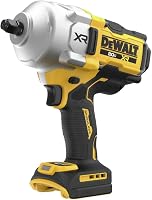
DeWalt DCF900P1 Impact Wrench Review: Worth It? (October 2026)
The DeWalt DCF900 is a strong choice for heavy fastening and wheel work. Choose the DCF900P1 kit if you need a battery and charger, or the DCF900B bare tool if you already own compatible equipment.
On this page (10 sections)
- The DeWalt DCF900P1 at a glance
- How much torque does the DCF900 provide?
- What do the DCF900's modes and controls do?
- DCF900P1 kit or DCF900B bare tool?
- Is the DCF900 a sensible choice for home wheel work?
- How does the DCF900 compare with other DeWalt models?
- How should you set up the DCF900 before a job?
- Which mistakes waste the DCF900's power or damage fasteners?
- How do you care for the wrench and battery?
- Which DeWalt DCF900 package should you choose?
The DeWalt DCF900 suits heavy fastening and wheel work, especially when loosening stubborn nuts is a regular task. Choose the DCF900P1 kit if you're starting without compatible charging gear, or the DCF900B bare tool if your DeWalt battery setup is already in place.
This is a high-torque 1/2 in impact wrench for jobs such as wheel lugs, large pipe flanges and concrete anchor bolt setting. Small screws, delicate assemblies and cramped access call for a different tool choice.
The DeWalt DCF900P1 at a glance
The DCF900P1 is the complete battery-kit choice for buyers who need this wrench and the equipment to power it. The package includes a 5.0 Ah battery, charger and kit bag.
DeWalt DCF900P1 1/2 Inch Impact Wrench Kit: Best for starting fresh

- 1,030 ft-lb max fastening torque
- 1,400 ft-lb max breakaway torque
- 4-mode speed settings
- 5.0 Ah battery and charger included
Choose this kit for heavy fastening jobs when you also need a battery and charger. Its controls help manage output, but final tightening still needs the correct torque procedure.
Pros
- Battery, charger and kit bag included
- High output for demanding fastening jobs
- Variable speed trigger and Precision Wrench control
- DeWalt 3-year limited warranty
Cons
- Unnecessary output for small fasteners
- Duplicates charging gear if you already own compatible equipment
The wrench combines a variable speed trigger with selectable modes, giving you more control than a single full-output setting. Its LED helps you see the socket and fastener in dim areas.
DeWalt also includes a shock-absorbing battery connection designed to reduce battery wear during use. The oil-resistant glass-filled nylon housing suits the oily surroundings common in mechanical work, though it still needs routine cleaning.
Who should buy the DeWalt DCF900P1?
Buy the kit if you regularly work on large fasteners and need your first compatible battery and charger. It also makes sense when you want a separate charging setup for the place where this wrench will stay.
Skip it if your existing battery setup already covers the job, or if most of your work involves small bolts and light assembly. A complete kit only helps when its contents fill a real gap.
Don't choose the DCF900 solely because a stubborn nut defeated a smaller tool once. Think about the work you repeat, the room around those fasteners and how long you'll hold the wrench during each session.
How much torque does the DCF900 provide?
DeWalt rates the DCF900 at 1,030 ft-lb maximum fastening torque and 1,400 ft-lb maximum breakaway torque. Fastening refers to tightening output, while breakaway refers to loosening output.
Neither figure is a torque setting you can select for a wheel nut. Actual results depend on the joint, battery condition, socket setup and time spent impacting.
For buying purposes, the useful question is whether heavy fastener removal is a regular need. If it is, the DCF900's output gives it a clear role; if it isn't, handling and access may matter more.
For wheel work, compare the vehicle's required tightening torque with the correct finishing procedure, rather than treating maximum output as the target. Our guide to torque needs for lug nuts explains that distinction.
What do the DCF900's modes and controls do?
The 4-mode selector and variable speed trigger help you manage output as the task changes. DeWalt's Precision Wrench mode is designed to help prevent overtightening in forward and fastener run-off in reverse.
Start with the control setting recommended in the tool instructions for your task. Apply the trigger gently while seating the socket, keeping it straight on the fastener before increasing input.
Precision Wrench mode is useful when a fastener changes from resisting movement to turning freely. Keep control of the nut or bolt as it comes loose, especially when dropping it could damage nearby parts.
The mode does not measure the final clamping force of the joint. Continuing to impact after a fastener seats can still cause damage, so stop and use the required finishing method.
An impact wrench turns fasteners through repeated rotational blows. Our guide on how a cordless impact wrench works explains why that action differs from a drill or impact driver.
DCF900P1 kit or DCF900B bare tool?
Choose the DCF900P1 for the battery package and the DCF900B when you already have compatible equipment. The kit does not buy you a stronger version of the wrench.
| Buying question | DCF900P1 kit | DCF900B bare tool |
|---|---|---|
| Do you need a battery? | 5.0 Ah included | Sold separately |
| Do you need a charger? | Included | Sold separately |
| Do you need a carrying bag? | Included | Not included |
| Is wrench output different? | Same DCF900 output | Same DCF900 output |
| Best starting point | No compatible charging setup | Existing compatible charging setup |
Before choosing the bare tool, check the exact battery and charger compatibility in their instructions. Also consider whether that battery is usually tied up in another tool when you need the wrench.
A single shared battery can suit occasional jobs. For repeated work, waiting for another tool's battery to become available can interrupt the job even though the wrench itself is ready.
The DCF900B uses a hog ring anvil. This retention style generally suits frequent socket changes, though you should check that each socket is secure before pulling the trigger.
Is the DCF900 a sensible choice for home wheel work?
The DCF900 makes sense for regular wheel removal and other heavy garage jobs. For occasional wheel changes alone, consider how much tool you want to carry and store.
Its output doesn't remove the need for a sound wheel-work routine. Follow the vehicle maker's lifting instructions, use the specified support equipment and never rely on a jack alone while working beneath a vehicle.
For installation, start each lug nut by hand to avoid cross-threading. Follow the required tightening sequence and finish with a calibrated torque wrench.
Avoid using repeated impacts as a way to decide that a wheel is tight enough. The distinction between removal speed and accurate tightening is covered in our impact wrench vs torque wrench guide.
Read our guide on using an impact wrench to remove lug nuts for the full sequence. Keep the correct torque specification available before beginning the job.
How does the DCF900 compare with other DeWalt models?
Choose the DCF892 for lighter handling, the DCF900 for demanding general work, or the DCF961 when difficult heavy fasteners justify greater output. Access and socket retention deserve as much attention as the torque figures.
DCF900 vs DCF892: repeated work or extra output?
The DCF892B delivers 600 ft-lb maximum fastening torque and 800 ft-lb maximum breakaway torque. Its lower tool weight makes it worth considering when repeated lifting and repositioning are a bigger concern than maximum removal force.
Choose it for jobs that fit that output range, particularly when you keep the same socket fitted for a series of fasteners. A detent pin generally favors secure retention over quick socket swaps.
Skip it if the main reason for buying is difficult large-fastener removal. The DCF900 gives you more output for that role, while the DCF892 prioritizes a lighter tool.
Don't assume a lighter wrench will fit every tight opening. Check the whole working space, including the socket, battery and room needed to keep the drive straight.
DCF900 vs DCF961: when is more torque useful?
The DCF961B raises maximum fastening torque to 1,320 ft-lb and maximum breakaway torque to 1,900 ft-lb. It has 3 speed settings plus Precision Wrench mode.
DeWalt says it automatically adds power after 4 seconds of impacting to help loosen stubborn fasteners. That feature fits demanding removal work better than a buying decision based only on routine wheel installation.
Choose the DCF961 when difficult heavy fasteners are a recurring part of your work. Skip the step up when the DCF900 already matches the jobs you need to finish.
Confirm the DCF961 package contents before ordering because its battery inclusion details conflict. Our DCF900 vs DCF961 comparison covers the output and control differences in more detail.
How should you set up the DCF900 before a job?
Start with a charged compatible battery, the correct impact-rated socket and a clear view of the fastener. Good setup helps transfer the wrench's output without damaging the socket or fastener.
- Remove the battery before fitting accessories. Inspect the anvil, retention ring and socket for wear or damage.
- Match the socket to the fastener. Use the correct size and an impact-rated socket, preferably a 6-point design for hex nuts and bolts.
- Keep the setup short where practical. Add extensions or adapters only when access requires them, and use impact-rated parts.
- Secure the work. Support the assembly so it cannot shift suddenly when the fastener loosens.
- Seat the socket fully. Hold the wrench square to the fastener and keep your other hand clear of moving parts.
- Select the proper direction and mode. Check both before pulling the trigger, then begin with controlled input.
Wear eye and hearing protection while using the wrench. Position yourself so a sudden release doesn't cause you to strike nearby parts or lose your balance.
If a fastener won't move, pause and inspect the setup instead of holding the trigger indefinitely. Check battery charge, socket fit, turning direction and the condition of the fastener before deciding how to proceed.
Which mistakes waste the DCF900's power or damage fasteners?
The biggest mistakes are poor socket fit, unnecessary adapters and too much tightening time. A high-output wrench cannot correct those choices.
A loose-fitting socket can round a fastener and make later removal harder. Stop if the socket rocks excessively or the fastener's corners are already damaged.
Long stacks of extensions and adapters can reduce effective output and make it harder to keep the socket aligned. Solve the access problem with the simplest suitable setup.
Don't use the impact to start threads. Turn the nut or bolt by hand first, and stop if it binds rather than forcing it farther.
Avoid treating every seized fastener as a power shortage. Corrosion, damaged threads or a failing stud may call for a different removal method instead of a larger wrench.
For anchors and other critical joints, follow the fastening system's installation instructions. The DCF900's intended applications do not mean every anchor or bolt should receive impact tightening.
How do you care for the wrench and battery?
Keep the vents, battery connection and socket retention parts clean, and inspect them before each job. Remove the battery before cleaning or changing accessories.
Wipe away oil and dirt using the cleaning method allowed in the tool manual. Keep liquids out of the housing and battery contacts, and don't treat the oil-resistant housing as protection from soaking.
Check sockets for cracks and worn drive openings. Replace damaged accessories rather than continuing until they fail under impact.
Let a hot tool or battery cool as directed before further use or charging. Store the wrench and battery in a dry place away from loose metal objects that could bridge battery terminals.
Which DeWalt DCF900 package should you choose?
Choose the DCF900P1 when you need the wrench, battery and charger together. Choose the DCF900B when compatible equipment is already available and heavy fastening is the gap in your tool kit.
Pick the DCF892 if repeated handling matters more than the DCF900's extra output. Move to the DCF961 when stubborn heavy fasteners regularly justify the step up.
For a broader comparison, use our best DeWalt impact wrench guide. If you're still defining the job, our cordless impact wrench buying guide and guide to choosing an impact wrench help match drive size, battery setup and output to your work.
Frequently asked questions
How much torque does the DeWalt DCF900 have?
DeWalt rates the DCF900 at 1,030 ft-lb maximum fastening torque and 1,400 ft-lb maximum breakaway torque; these are maximum output figures, not selectable tightening targets. Use the fastener or vehicle maker's required torque and procedure, with a calibrated torque wrench for final tightening where specified.
What comes with the DeWalt DCF900P1 kit?
The DCF900P1 kit includes the DCF900 wrench, a 20V MAX 5.0 Ah battery, a charger and a kit bag; choose it when you need the charging equipment as well as the wrench. The DCF900B bare tool suits buyers who already own a compatible battery and charger.
Can the DCF900 remove lug nuts?
Yes, wheel lugs are an intended DCF900 application; actual removal depends on fastener condition, battery condition and the socket setup, so maximum output does not promise success on every nut. Follow the vehicle's procedure and our guide to removing lug nuts with an impact wrench.
Should I choose the DCF900 or DCF961?
Choose the DCF900 for demanding wheel and general heavy fastening work; choose the DCF961 when stubborn large fasteners make its higher maximum output useful, rather than buying it simply for the larger number. Our DCF900 vs DCF961 breakdown explains the differences in output and controls.