How Do You Remove Lug Nuts With an Impact Wrench?
To use an impact wrench to remove lug nuts, loosen each nut slightly with the tire on the ground, then lift and support the vehicle before removing them fully. Secure the vehicle, use a snug impact-rated socket, and finish reinstallation with a torque wrench.
On this page (8 sections)
- How do you use an impact wrench to remove lug nuts?
- What socket and wrench should you choose for wheel work?
- Which impact wrench suits your setup?
- What should you do when a lug nut won't move?
- How do you tighten lug nuts after removing the wheel?
- Which safety and care habits matter most?
- When should you use a hand tool instead?
- How should you choose and use an impact wrench to remove lug nuts?
To use an impact wrench to remove lug nuts, loosen each nut slightly with the tire on the ground, then raise and support the vehicle before removing them fully. Park on firm, level ground, chock the wheels, and use a snug impact-rated socket.
Check your vehicle manual for lift points, support points, wheel removal instructions, and lug nut torque. The impact wrench handles removal; a torque wrench sets the final tightness when the wheel goes back on.
How do you use an impact wrench to remove lug nuts?
Secure the vehicle, break each nut loose before lifting, then remove the nuts with the vehicle properly supported. Keep the wrench square to the wheel and release the trigger as soon as each nut comes free.
- Park on firm, level ground, select Park or a gear as directed, and set the parking brake.
- Chock the wheels that will remain on the ground, following the vehicle manual.
- Gather the correct socket, wheel-lock key if needed, lifting equipment, and torque wrench before starting.
- Remove the wrench battery, fit the socket, and check that the retaining ring holds it securely.
- Refit the battery, select reverse, and fully seat the socket on a nut.
- Use brief trigger pulls to loosen each nut slightly, leaving every nut installed.
- Raise and support the vehicle at its approved points with properly rated equipment and jack stands.
- Remove the nuts, supporting the wheel as the last one comes off, then place the wheel where it cannot roll or fall.
How should you control an impact wrench when removing lug nuts?
Keep the socket fully seated and use only enough trigger time to loosen the nut. Hold the tool firmly without pushing it sideways, and stop the socket before moving to the next fastener.
Once a nut breaks free, ease off the trigger so it doesn't spin off unexpectedly. Keep fingers away from the socket and nut while either is turning.
For general controls and setup beyond wheel work, see how to use a cordless impact wrench.
What socket and wrench should you choose for wheel work?
Choose a six-point impact-rated socket and a wrench that suits your vehicle, battery system, and access around the wheel. A 1/2 in drive is a common choice, but drive size alone doesn't establish loosening power.
Confirm the socket fits the actual nut rather than guessing from the vehicle's make. Swollen capped nuts, damaged corners, and aftermarket wheel hardware can change the fit.
The socket needs enough depth to engage fully and enough clearance to enter the wheel recess without rubbing. Avoid unnecessary adapters and long extensions, which add movement and can reduce the impact reaching the fastener.
Use a wheel-lock key only as its maker directs, since some keys aren't suitable for impact use. Remove decorative nut covers before fitting the socket.
For buying decisions, compare breakaway torque separately from fastening torque. Maximum figures describe different tasks and don't guarantee that a tool will free a particular rusted or overtightened nut.
Our guide to what torque an impact wrench needs for lug nuts explains that distinction. The cordless impact wrench buying guide covers batteries and tool size.
Which impact wrench suits your setup?
Choose around your existing batteries first, then consider controls and how often you'll remove wheels. These 4 high-torque options suit readers who need removal power, but occasional wheel work may not justify starting another battery system.
DeWalt DCF900B: for buyers who want more control options
The DeWalt suits buyers who want 4-mode speed settings, a variable speed trigger, and Precision Wrench control. DeWalt designed Precision Wrench to help limit overtightening in forward and fastener run-off in reverse.
Its maximum breakaway torque is 1,400 ft-lb, but that figure isn't a wheel-tightening target. This is a tool-only model, so skip it if you need an included battery and charger or your wheel recess won't accommodate a suitable socket setup.
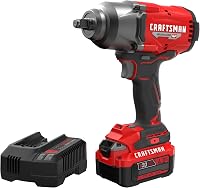
Craftsman V20 RP: for buyers starting without batteries
The Craftsman kit suits a first-time buyer who needs a wrench, 4.0Ah battery, charger, and soft bag together. Its 3-speed settings and variable speed trigger give you control as a nut loosens.
Craftsman specifies up to 1,000 ft-lb of breakaway torque. Skip the kit if you already have another compatible tool platform and would rather share batteries than maintain a separate set.
Makita XWT08Z: for buyers with compatible LXT batteries
The Makita makes sense for readers already using compatible 18V LXT batteries who want a high-torque wheel tool. It has 3-speed power selection and a friction ring for socket changes, with 1,180 ft-lb of maximum nut-busting torque.
Battery and charger are sold separately, and the tool weighs 7 lb. Skip it if holding a heavy wrench square to the wheel would be difficult or you need a complete starter kit.
Milwaukee 2767-20: for buyers already using M18 tools
The Milwaukee suits M18 users who want a bare high-torque wrench without adding another battery platform. Its friction ring supports quick socket changes, and maximum nut-busting torque is 1,400 ft-lb.
Milwaukee says its electronics protect against overload and overheating. Skip this bare tool if you need a battery included, and remember that protection features don't make prolonged hammering on a stuck nut a good approach.
What should you do when a lug nut won't move?
Stop and check the setup before adding more power. Confirm reverse is selected, the battery is charged, and the socket reaches the nut fully without bottoming out or contacting the wheel.
If the wrench has power modes, increase the setting only after those checks. Use brief attempts rather than holding the trigger while the socket hammers without progress.
Don't rock the wrench sideways, attach a pipe to its handle, or apply heat near the tire and wheel. Stop immediately if the socket slips, the nut starts rounding, or the stud turns with it.
A seized nut can turn a routine wheel change into a hardware repair. Get professional help when damage or corrosion prevents secure engagement.
How do you tighten lug nuts after removing the wheel?
Start every nut by hand and finish with a torque wrench set to the vehicle maker's specification. Use hand tools for snugging so excess impact force doesn't tighten the nuts beyond the target first.
Check that the wheel seats flush and follow the manual's directions for the mounting surfaces and wheel hardware. Don't add oil or anti-seize to the threads unless the vehicle maker specifically requires it, because lubrication changes the clamping force at a given torque.
Turn each nut several rotations by hand, stopping if it binds. Snug them evenly in the specified sequence, commonly a star or crisscross pattern, and follow the manual's lowering instructions before final torque.
A torque wrench clicking on an already overtightened nut doesn't correct it. Read how much torque lug nuts need and compare an impact wrench with a torque wrench for wheel work.
Which safety and care habits matter most?
Keep the vehicle stable and inspect your equipment before each job. Wear eye and hearing protection, secure loose clothing and hair, and keep clear of the rotating socket.
Never put any part of your body under a vehicle held only by a jack. Stop if a stand shifts, the ground settles, or the vehicle moves.
Remove the battery before changing accessories or inspecting the tool. Replace cracked sockets, and check that the socket retention ring still holds accessories securely.
After use, wipe off grit and keep the tool's vents clear. Follow the wrench manual for cleaning and storage, and let a hot tool or battery cool before continuing.
When should you use a hand tool instead?
Use a breaker bar for controlled manual loosening when the nut and socket remain sound but the impact wrench isn't making progress. Keep the tire on the ground and the vehicle secured while applying steady force.
Don't jump on the bar or use improvised extensions. Rounded nuts, turning studs, and damaged wheel-lock keys call for professional help rather than more leverage.
For occasional wheel changes, a breaker bar and torque wrench may cover your needs without another battery tool. Frequent wheel work makes an impact wrench more useful; compare cordless impact wrenches for lug nuts before choosing.
How should you choose and use an impact wrench to remove lug nuts?
Pick the Craftsman kit if you're starting without batteries, or choose the Makita or Milwaukee to match compatible batteries you already use. Choose the DeWalt if its extra control options suit your work.
Before using an impact wrench to remove lug nuts, have the correct socket, secure lifting equipment, and final torque specification ready. Those items matter more than choosing the highest advertised torque.
Before driving, confirm the wheel sits flush and every nut has reached the specified torque; follow any required recheck instructions. Use our impact wrench and torque wrench comparison to plan both removal and reinstallation.
Frequently asked questions
Can I remove lug nuts with a cordless impact wrench?
Yes, a cordless impact wrench can remove lug nuts when it has enough loosening power and a correctly sized impact socket. Secure the vehicle, loosen each nut slightly while the tire touches the ground, then lift and support the vehicle as its manual directs before removing the nuts fully.
Should I use an impact wrench to tighten lug nuts?
Use hand tools for snugging and a torque wrench for final tightening, because an impact wrench can overtighten lug nuts even at a low setting. Start every nut by hand, follow the vehicle maker's tightening sequence, and apply the specified final torque after following the manual's lowering instructions.
What socket should I use to remove lug nuts?
Use a six-point impact-rated socket that fits the lug nut snugly and matches the wrench's square drive. Check that its outside diameter clears the wheel recess and its depth lets it seat fully on the nut, then avoid unnecessary adapters or extensions that can reduce control.
Do I need to lift the vehicle before loosening lug nuts?
Loosen each lug nut slightly before lifting, with the tire touching the ground and the vehicle secured against movement. Leave the nuts installed until the vehicle is raised and supported as its manual directs, and use properly rated jack stands at approved support points before removing the wheel.