How Do You Use a Cordless Impact Wrench?
Here's how to use an impact wrench: fit an impact-rated socket, select the direction, and work in short bursts with the socket fully seated. Start threads by hand and finish specified tightening with a torque wrench.
On this page (9 sections)
- How do you use an impact wrench step by step?
- What socket and setting should you use?
- Which impact wrench suits your work?
- How do you loosen a stubborn fastener?
- How do you tighten without damaging threads?
- How do you use an impact wrench on lug nuts?
- What mistakes cause the most trouble?
- How should you care for the wrench and sockets?
- Which setup should you choose next?
Here's how to use an impact wrench: fit an impact-rated socket, select the direction, and press the trigger in short bursts while keeping the socket fully seated. Start threads by hand during assembly, and use a torque wrench for final tightening whenever the job specifies a torque.
The tool's repeated turning blows help loosen stubborn nuts and bolts. Good results depend on socket fit, secure work support, and knowing when to stop.
How do you use an impact wrench step by step?
Secure the work, fit the socket with the battery removed, and check the direction before pulling the trigger. Begin at a low setting so you can see how the fastener responds.
- Read the job instructions and check whether impact tools are allowed.
- Secure the part and support anything that could fall when the fastener comes out.
- Wear eye protection and the hearing protection required by the tool manual.
- Remove the battery and fit the correct impact-rated socket.
- Check that the socket-retention system holds it securely.
- Refit the battery, choose the direction, and select a low mode if available.
- Seat the socket fully, hold the wrench firmly, and squeeze the trigger briefly.
- Release the trigger and check progress before continuing.
Keep hair, loose clothing, jewelry, and fingers away from rotating parts. Don't change direction while the tool is turning.
An impact wrench uses a square drive for sockets, while an impact driver usually holds screwdriver bits. Read how a cordless impact wrench works for more on its hammering action.
What socket and setting should you use?
Choose an impact-rated socket in the exact fastener size, with enough depth to seat fully. A low speed mode helps control movement, but it doesn't set final torque.
Don't substitute a nearby inch size for a metric fastener or the other way around. A 6-point socket is a useful choice for hex nuts and bolts because it grips across their flats.
Regular chrome hand-tool sockets can break under repeated impacts. Any extension, adapter, or swivel you add must also be suitable for impact use.
Use the shortest socket setup that reaches the fastener without interference. Extra joints can make alignment harder and change how much force reaches the fastener.
The impact wrench size guide explains which drive sizes suit different jobs. Drive size tells you which sockets fit, not how much tightening force a particular bolt needs.
How to use an impact wrench on a bolt
Hold the socket straight and fully seated, then use brief trigger pulls to watch the bolt's response. Pushing sideways won't help it loosen and can damage the fastener head.
Check whether the bolt has a left-hand thread or a locking feature before assuming more power is the answer. Most standard right-hand threads loosen counterclockwise when viewed from the fastener head.
Which impact wrench suits your work?
Choose for fastener size, removal demands, access, and battery platform, rather than the biggest torque figure. All 3 kits below have a 1/2 in drive and include a battery and charger.
Fastening torque describes tightening output, while breakaway torque describes loosening capability. Neither figure is a final torque setting or a promise that every seized bolt will come free.
For a broader view of batteries and tool sizes, use our cordless impact wrench buying guide.
DeWalt DCF900P1: for demanding removal jobs
The DeWalt suits buyers tackling large, stubborn fasteners who also want extra control during removal. DeWalt specifies maximums of 1,030 ft-lb fastening torque and 1,400 ft-lb breakaway torque.
Its Precision Wrench control is designed to help limit overtightening in forward and fastener run-off in reverse. That helps address a loose nut spinning away, but you still need to support the part and catch loose hardware.
The kit includes a 5.0 Ah battery, charger, and bag. Skip this high-output option if your work mostly involves small screws, delicate assemblies, or spaces where you can't align the tool.
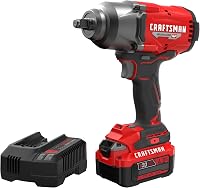
Craftsman V20 RP: for V20 automotive work
The Craftsman suits V20 users who need a high-torque kit for automotive and other substantial fastening jobs. Its maximum figures are 700 ft-lb tightening torque and 1,000 ft-lb breakaway torque.
The brushless wrench has a hog ring anvil for socket changes, and the kit includes a 4.0 Ah battery, charger, and soft bag. Check that each socket is retained securely after fitting it.
Skip it if you mainly work on small engine covers, interior trim, or other low-torque fasteners. Those tasks favor hand tools or a smaller wrench that suits the available space.
Ryobi ONE+: for routine home projects
The Ryobi suits ONE+ users doing routine fastening work who don't need the high-output options above. It provides up to 375 ft-lb of fastening torque and comes with a 4.0 Ah battery and charger.
Its friction ring anvil holds sockets while allowing quick changes. Add a separate work light if the socket blocks the LED's beam.
Skip it if your main goal is removing heavily seized hardware and you need a stated breakaway figure to compare tools. Its fastening figure alone doesn't establish removal capacity.
How do you loosen a stubborn fastener?
Use reverse and brief bursts, stopping once the fastener breaks loose. Support any bracket, wheel, or other part that the fastener holds before removing it completely.
If it doesn't move, check socket fit, direction, battery charge, and signs of corrosion. Don't keep hammering a head that's rounding or a stud that appears to twist.
A suitable penetrating oil may help corroded threads when the job permits it. Follow its directions, allow time to work, and keep it away from surfaces that must remain clean, such as brake friction surfaces.
Never add a pipe to the wrench or strike its housing. If controlled attempts fail, stop and choose a removal method suited to the part.
How do you tighten without damaging threads?
Start every nut or bolt by hand, turning it several threads before using power. If it binds early, back it out and check alignment rather than forcing it onward.
Use the impact only for gentle initial snugging when the job instructions allow it. Small fasteners, soft materials, gaskets, and precision assemblies may require hand tools throughout.
Trigger time cannot tell you the final torque. Battery condition, thread friction, socket setup, and the joint itself all affect the result.
A torque wrench clicking on an already overtightened fastener doesn't correct it. If you overshoot, follow the service procedure for loosening, inspection, and retightening.
For wheel work, impact wrench versus torque wrench explains why both tools have separate roles.
How do you use an impact wrench on lug nuts?
Use it for removal or permitted initial snugging, then finish installation to the vehicle's specified torque. Follow the vehicle manual for lifting, support points, and tightening sequence.
Park on firm, level ground, apply the parking brake, and secure the vehicle against rolling. Loosen the nuts slightly before lifting if the vehicle instructions call for that sequence.
Use suitable support equipment, and never work beneath a vehicle supported only by a jack. Keep the socket straight so it doesn't slip off or damage the nut.
During installation, start all nuts by hand and bring the wheel into place evenly. Follow the required tightening pattern and lowering procedure before completing final torque.
Our guide to removing lug nuts with an impact wrench covers the wheel-specific process.
What mistakes cause the most trouble?
The main mistakes are poor socket engagement, uncontrolled tightening, and using power where access is wrong. Stop whenever the tool can't stay aligned or the workpiece shifts.
- Don't use cracked sockets, worn fastener heads, or a damaged retention system.
- Don't treat a low mode as a calibrated torque limit.
- Don't keep impacting after a fastener seats.
- Don't wedge the tool into a gap that traps your hand.
- Don't use the wrench as a hammer or pry bar.
In tight spaces, check clearance with the tool off before starting. A shorter socket or smaller wrench may help, but use a hand tool if that gives you proper access.
How should you care for the wrench and sockets?
Remove the battery before cleaning or inspection, and store the equipment dry. Follow the manual for charging, storage temperatures, and service.
Wipe away dirt with a dry cloth and keep vents clear. Don't immerse the tool, spray cleaner into openings, or add lubricant unless its instructions call for it.
Inspect sockets, the anvil, battery contacts, and housing before the next job. Stop using equipment with cracks, loose parts, a damaged battery, or unusual operation.
Which setup should you choose next?
Choose DeWalt for demanding removal work, Craftsman for high-torque jobs within the V20 platform, or Ryobi for routine ONE+ projects. Skip all 3 when small fasteners or restricted access call for a smaller tool.
Learning how to use an impact wrench starts with controlled removal and careful thread engagement. Budget for impact sockets and a suitable torque wrench as part of the setup.
If you're still choosing a tool, our guide to choosing an impact wrench explains torque, anvil, and battery choices. For your first wheel job, follow the steps for removing lug nuts with an impact wrench.
Frequently asked questions
Can you loosen bolts with a cordless impact wrench?
Yes, a cordless impact wrench can loosen nuts and bolts when its power and socket suit the job. Secure the workpiece, check the thread direction, and hold the socket squarely on the fastener; stop if the socket slips, the head starts rounding, or the part moves.
Can you tighten lug nuts with an impact wrench?
Use an impact wrench only for gentle initial snugging if the vehicle maker allows it, then finish with a torque wrench; start every nut by hand and follow the specified sequence. If you drive a nut too tight, clicking a torque wrench afterward won't correct that excess tightening.
Do you need special sockets for an impact wrench?
Yes, use impact-rated sockets that match the wrench's drive and the fastener's exact size; ordinary chrome hand-tool sockets can break under repeated impacts. Choose enough socket depth to clear the stud, inspect for cracks or wear, and use only extensions or adapters approved for impact tools.
Should you use an impact wrench to remove a stuck bolt?
An impact wrench can help with a stuck bolt if the socket grips securely and the surrounding part can handle the force; try brief bursts after checking direction and access. If nothing moves, inspect for corrosion, damaged threads, or a locking feature before applying more force.