Best 3/8 Inch Impact Wrenches: Top 5 Picks (October 2026)
The best 3/8 inch impact wrenches include the Milwaukee M18 FUEL 3/8 Inch Compact Impact Wrench for cramped repair jobs, the DeWalt DCF923B ATOMIC 3/8 Inch Impact Wrench for varied DeWalt projects, and the DeWalt DCF913B 3/8 Inch Impact Wrench for routine DeWalt repairs.
On this page (7 sections)
- Which is the best 3/8 impact wrench for your work?
- How should you compare tightening and breakaway torque?
- What should you check before choosing a 3/8 impact wrench?
- How should you set up and use a 3/8 impact wrench?
- Which common mistakes damage fasteners or waste money?
- How do you care for the tool between repairs?
- Which best 3/8 impact wrench pick should you buy?
The Milwaukee M18 FUEL Compact is the best 3/8 impact wrench for most buyers here because it combines a short body with controls for both fastening and removal. Existing DeWalt users should compare the DCF923B's extra modes with the DCF913B's smaller size, while M12 users have a strong reason to consider the Stubby.
Choose around the work you repeat most often. Access, socket fit and battery compatibility can matter more than the biggest torque number.
For a broader overview, see our best impact wrenches guide. Our 1/2 in vs 3/8 in impact wrench comparison helps you decide which drive size belongs in your kit.
Our picks at a glance
-
1
 Best for cramped repair jobs
Milwaukee M18 FUEL 3/8 Inch Compact Impact Wrench
8.9/10 our score
See it on Amazon -
2
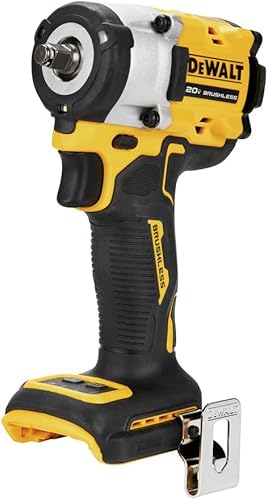 Best for varied DeWalt projects
DeWalt DCF923B ATOMIC 3/8 Inch Impact Wrench
8.4/10 our score
See it on Amazon -
3
 Best for routine DeWalt repairs
DeWalt DCF913B 3/8 Inch Impact Wrench
8.2/10 our score
See it on Amazon
- 4
 Check it
Craftsman V20 RP 3/8 Inch Impact Wrench
Best for occasional V20 maintenance - 5
 Check it
Milwaukee M12 FUEL 3/8 Inch Stubby Impact Wrench
Best for existing M12 users
Which is the best 3/8 impact wrench for your work?
The M18 Compact is the strongest all-round choice for confined repairs, while the other picks serve specific battery platforms and job patterns. Choose the tool that solves your access or control problem before comparing maximum output.
We compared the supplied specifications and features, with particular attention to fit, fastening control and battery needs. A higher loosening claim does not automatically make a tool a better choice for smaller repair fasteners.
Milwaukee M18 FUEL 3/8 Inch Compact Impact Wrench: Best for cramped repair jobs
- 4.8 in long
- Up to 250 ft-lb nut-busting torque
- 4-mode DRIVE CONTROL
- Auto shut-off for hand-tight fastening
A short body, lighting around the anvil and separate fastening and removal controls suit repairs in confined spaces. Choose it when access and control matter more than maximum loosening output.
Pros
- Short body for confined spaces
- Tri-LEDs surround the anvil
- Removal control slows the tool after a bolt loosens
Cons
- Battery and charger are not included
- Lower claimed nut-busting torque than the M12 Stubby
The M18 Compact suits buyers who regularly work around brackets, housings and nearby parts that restrict access. Its 4.8 in body gives it a clear role as a compact repair tool rather than a tool chosen mainly for heavy fasteners.
Milwaukee claims up to 250 ft-lb of nut-busting torque. The more useful distinction for mixed repair work is its 4-mode DRIVE CONTROL, which provides preset speed and impact levels.
Mode 4 includes auto shut-off that applies no more than 20 ft-lb for hand-tight fastening applications. It also includes bolt removal control, which reduces speed after a fastener loosens to help prevent drops.
That combination suits jobs where you want help breaking a bolt free, then a calmer finish as it comes out. Still support loose hardware with your free hand when safe, especially above an open tray or engine compartment.
Tri-LEDs surround the anvil, helping illuminate the socket area. The friction ring anvil also suits frequent socket changes during repairs.
Buy it for access and control, especially if you already use M18 batteries. Skip it if your main need is removing large, heavily seized fasteners or if another battery platform already covers your work well.
DeWalt DCF923B ATOMIC 3/8 Inch Impact Wrench: Best for varied DeWalt projects
- Up to 300 ft-lb fastening torque
- Up to 450 ft-lb breakaway torque
- 4 speed settings
- Precision Wrench and Timber Screw modes
The DCF923B suits DeWalt users who move between bolt work and timber screws. Its control settings provide more reasons to choose it than torque alone.
Pros
- Higher claimed breakaway torque than the DCF913B
- Precision Wrench control helps limit overtightening and run-off
- LED brightness control
Cons
- Battery is not included
- More control options to learn than a simple trigger-led setup
The DCF923B suits DeWalt users who want one tool for varied fastening work. Its 4 speed settings, Precision Wrench control and Timber Screw mode make it the more versatile DeWalt choice here.
DeWalt claims up to 300 ft-lb of maximum fastening torque and 450 ft-lb of maximum breakaway torque. Those figures give it more claimed output in both directions than the DCF913B.
Precision Wrench control helps prevent overtightening and fastener run-off. It is useful when moving between stubborn removal work and fastening that calls for more restraint.
Timber Screw mode gives buyers who also work with wood another reason to choose this model. Check the screw maker's installation instructions before using powered impact fastening on structural hardware.
An LED with brightness control helps when the fastener sits in a shadowed recess. The hog ring anvil supports quick socket changes, while the glass-filled nylon housing resists damage from some oils and solvents.
Buy it for mixed DeWalt projects where you will use the extra modes. Skip it if a smaller, lighter tool is your main goal, or if your work rarely calls for anything beyond straightforward nut-and-bolt removal.
DeWalt DCF913B 3/8 Inch Impact Wrench: Best for routine DeWalt repairs
- Up to 250 ft-lb tightening torque
- Up to 400 ft-lb breakaway torque
- 5.87 in long
- LED ring
A short body and quick socket changes suit routine nuts-and-bolts work on the DeWalt platform. Pick it when size matters more than the DCF923B's extra modes.
Pros
- Short body for restricted access
- Lighter than the DCF923B by supplied tool weights
- LED ring illuminates the work area
Cons
- Battery is not included
- Lower claimed fastening and breakaway torque than the DCF923B
The DCF913B suits buyers who want a compact DeWalt tool for routine repairs. At 5.87 in long and 2.3 lb, it is a useful alternative to the DCF923B when working room and carrying weight take priority.
DeWalt claims up to 250 ft-lb of tightening torque and 400 ft-lb of breakaway torque. Its applications include bolts and lug nuts, though the condition of each fastener still determines how difficult removal will be.
The hog ring anvil suits jobs that involve moving between socket sizes. An LED ring helps light the area around the fastener, which is useful under a bench or inside a crowded assembly.
This is the DeWalt pick for buyers whose everyday work does not justify choosing around Precision Wrench or Timber Screw modes. The DCF923B remains the clearer choice when those specific features matter.
Buy it for routine DeWalt repairs where body size matters more than extra settings. Skip it if controlled fastening modes are central to your work, or if wheel and suspension fasteners are the main reason you are buying an impact wrench.
For that heavier workload, first decide whether a larger drive and matching sockets would serve you better.
Craftsman V20 RP 3/8 Inch Impact Wrench: Best for occasional V20 maintenance
- 165 ft-lb max torque
- Variable speed trigger
- Hog ring anvil
- Built-in LED worklight
The Craftsman suits V20 users who want powered help with ordinary maintenance and assembly. Its variable trigger provides speed adjustment without a menu of preset modes.
Pros
- Variable speed trigger
- Hog ring supports quick socket changes
- Built-in LED worklight
Cons
- Longer body than the Milwaukee Compact and Stubby
- Battery and charger are sold separately
The Craftsman V20 RP makes the most sense for occasional maintenance when you already have V20 batteries. Its variable speed trigger lets you adjust speed without choosing among preset modes.
Craftsman gives it a 165 ft-lb maximum torque figure and names vehicle work, plant maintenance and general construction among its applications. Use that as a guide to its role in ordinary fastening rather than a promise about seized hardware.
A hog ring anvil supports socket changes, and the built-in LED helps illuminate the work. Its 8.5 in body deserves attention if your repair jobs take place between closely spaced parts.
Before choosing it for cramped work, check whether you can hold the socket square to the fastener. A tool that reaches the nut only at an angle is a poor fit, even if the socket can touch it.
Buy it for modest V20 maintenance needs, such as repeat disassembly and assembly where manual ratcheting takes time. Skip it if you need a particularly short body, preset fastening controls or a tool chosen mainly for difficult rusted fasteners.
Its strongest buying argument is fitting an existing V20 setup. Starting a new battery platform deserves a broader comparison.
Milwaukee M12 FUEL 3/8 Inch Stubby Impact Wrench: Best for existing M12 users
- 4.8 in long
- 2 lb tool weight
- Up to 550 ft-lb nut-busting torque
- Bare tool
The Stubby combines a short body with the highest claimed loosening output here. It makes the most sense for buyers who already use M12 batteries and want another compact repair tool.
Pros
- Short body
- Lowest supplied tool weight here
- Highest claimed nut-busting torque here
Cons
- Requires a compatible M12 battery and charger
- M18 batteries do not fit the M12 platform
The M12 Stubby suits buyers who already use M12 batteries and want a short impact wrench for repair work. Its 4.8 in length and 2 lb tool weight make size and handling the main reasons to shortlist it.
Milwaukee claims up to 550 ft-lb of nut-busting torque, the highest loosening figure here. That creates a useful combination on paper for buyers who want a compact tool with substantial claimed removal output.
Do not turn that maximum into a fastening target. A tool that can break a stubborn nut free can also damage a smaller fastener if used without restraint.
The Stubby uses M12 batteries, so an M18 battery collection does not make it a ready-to-use addition. Include the right battery and charger when comparing the complete setup.
Its supplied feature information gives less detail about fastening controls than the M18 Compact's. If a specific shut-off or removal mode is essential, verify that feature before choosing this model.
Buy it for an existing M12 kit when compact size and loosening output matter most. Skip it if you want to stay entirely within M18 or if clearly specified fastening controls are the main reason for your purchase.
How should you compare tightening and breakaway torque?
Compare fastening figures with fastening figures, and compare breakaway or nut-busting figures with other loosening figures. Neither type tells you the exact torque a fastener will receive during a trigger pull.
Fastening torque describes tightening capability. Breakaway and nut-busting figures describe loosening capability, so putting every number into one ranking gives a misleading result.
The 2 DeWalt models provide separate fastening and loosening maximums. Milwaukee provides nut-busting figures for both tools here, while Craftsman's maximum is not split into those 2 categories.
Maximum claims also do not create a precise cross-brand ranking. Fastener size, battery condition, sockets and the conditions used to measure output can affect the result.
For buying purposes, use torque to narrow the field after deciding what the tool must reach and which fasteners you need to move. A high-output tool is little help if its socket cannot sit fully on the nut.
Corrosion and previous overtightening can make a fastener much harder to remove than its original installation torque suggests. Do not assume a tool will free it simply because the advertised maximum exceeds that service value.
| Product | Best for | Length | Loosening torque | Anvil | Our score |
|---|---|---|---|---|---|
| Milwaukee M18 FUEL 3/8 Inch Compact Impact Wrench | cramped repair jobs | 4.8 in | Up to 250 ft-lb nut-busting | 3/8 in friction ring | 8.9 |
| DeWalt DCF923B ATOMIC 3/8 Inch Impact Wrench | varied DeWalt projects | Up to 450 ft-lb breakaway | 3/8 in hog ring | 8.4 | |
| DeWalt DCF913B 3/8 Inch Impact Wrench | routine DeWalt repairs | 5.87 in | Up to 400 ft-lb breakaway | 3/8 in hog ring | 8.2 |
| Craftsman V20 RP 3/8 Inch Impact Wrench | occasional V20 maintenance | 8.5 in | 3/8 in hog ring | 7.7 | |
| Milwaukee M12 FUEL 3/8 Inch Stubby Impact Wrench | existing M12 users | 4.8 in | Up to 550 ft-lb nut-busting | 6.9 |
What should you check before choosing a 3/8 impact wrench?
Choose around access, task size, battery compatibility and control, in that order. These checks help you avoid buying a powerful tool that is awkward for your actual repairs.
How does the best 3/8 impact wrench fit your workspace?
Check the complete tool with a suitable socket and battery, rather than comparing bare body length alone. You need room behind the handle, around the battery and in line with the fastener.
A shallow socket can save space when a long stud does not require a deep socket. A deep socket helps reach recessed nuts or clear exposed threads, but it adds length in front of the anvil.
Battery shape also affects access near rails, panels and bench surfaces. A larger pack can change the balance and clearance even when the tool body stays the same.
Extensions may help reach a recessed fastener, but they add movement and can reduce useful impact delivery. Start with the shortest direct socket arrangement that gives safe, square access.
Which jobs belong on your shortlist?
List the repairs you expect to repeat before comparing tools. Brackets, smaller assemblies and general disassembly often favor access and control over maximum loosening output.
Wheel work deserves a separate decision. A 3/8 in tool may handle some lug nuts, but frequent wheel removal calls for checking output, socket availability and the demands of your vehicle.
Our lug nut torque guide explains why wheel service torque and removal difficulty are different. Do not choose solely from the torque value printed in the vehicle manual.
For suspension or other safety-critical assemblies, follow the service procedure, including any requirement to replace fasteners. Some bolts have tightening sequences or angle steps that an impact wrench cannot complete accurately.
When should battery compatibility decide?
An existing battery platform should decide the purchase when 2 tools otherwise fit your jobs. It saves you from managing another charger and gives you a ready spare pack.
Check the exact platform, not just the brand name. Milwaukee M12 and M18 are different systems, and neither DeWalt 20V MAX nor Craftsman V20 becomes interchangeable because both use similar voltage language.
All 5 choices are bare-tool or tool-only versions. If you are starting from nothing, compare the complete tool, battery and charger setup before making your choice.
Choose a battery size that suits the way you hold the tool. Long sessions and awkward access may call for different priorities, so maximum battery capacity should not be the automatic choice.
Which controls are worth having?
Preset modes are worth prioritizing when you switch often between removal and careful fastening. They give you a repeatable starting point instead of relying entirely on trigger movement.
A variable trigger still requires care. Light pressure can help you approach a seated fastener, but it does not provide a measured tightening result.
Automatic controls add useful restraint without replacing judgment. The M18's hand-tight mode, for example, is still inappropriate for a joint whose permitted torque is below that mode's limit.
How should you set up and use a 3/8 impact wrench?
Use a correctly fitting impact-rated socket, start threads by hand and reserve final torque work for the proper torque wrench. Those habits matter more than squeezing every bit of output from the tool.
Prepare the socket and work area
Choose the exact socket size for the fastener, preferably a 6-point impact socket where suitable. A loose fit concentrates force on the corners and raises the risk of rounding the head.
Do not use ordinary chrome hand-tool sockets under impact. Inspect impact sockets for cracks, worn corners and damaged drive ends before use.
Remove the battery before changing sockets or inspecting the anvil. Seat the socket fully and check that the retaining ring holds it securely.
Support the work so it cannot turn or shift unexpectedly. For vehicle work, use the correct support equipment and never rely on a jack alone while working underneath.
Wear eye protection and suitable hearing protection. Keep loose clothing and hair away from rotating sockets, and move bystanders clear of the work.
Remove fasteners without losing control
Confirm the loosening direction before pulling the trigger, especially on assemblies that may use left-hand threads. Hold the socket square to the fastener and keep it fully engaged.
Use a controlled burst, then reassess if the fastener does not move. Stop if the socket slips, the head begins to round or the surrounding part moves instead.
Repeated hammering is a poor substitute for a removal plan. Corroded fasteners may need suitable penetrating treatment, a different tool or a repair method specific to the assembly.
As a nut approaches the end of its threads, slow down and support it when safe. A removal-control mode helps, but small hardware can still fall into an opening.
Reinstall without damaging threads
Clean and inspect the threads, then start the nut or bolt by hand for several turns. If it binds early, stop and correct the alignment rather than forcing it with the tool.
Use the lowest suitable setting for running the fastener down. Stop before applying heavy clamping force, then follow the required final tightening method.
Do not add oil or anti-seize unless the service procedure calls for it. Lubrication changes the relationship between applied torque and clamping force.
Our impact wrench use guide covers the full sequence. Keep the torque wrench ready before starting any job with a specified final torque.
Which common mistakes damage fasteners or waste money?
The main mistakes are buying by maximum torque alone, forcing poor socket access and using an impact wrench to judge final tightness. Avoiding them improves both tool choice and repair quality.
Buying around one difficult bolt
Choose for your regular workload rather than a single seized fastener. A tool selected only for maximum output may be less convenient for the smaller jobs you do every week.
If difficult heavy fasteners dominate your work, reconsider the drive size before buying. Adapters let some sockets connect, but they add length and another connection that must withstand impact.
Treating impact time as a torque setting
A short burst does not equal a fixed tightening value. Battery condition, joint stiffness, friction and how firmly the socket is engaged all affect the result.
Wheel fasteners need a torque wrench and the specified tightening pattern. Our impact wrench vs torque wrench guide explains the separate role of each tool.
Using more power when fit is the problem
Stop when a socket rocks or slips instead of holding it harder and continuing. Correct the socket size, clear debris from the fastener head or change the access route.
Also stop if your wrist position prevents you from holding the tool square. Removing an obstruction or using another tool can save the fastener from damage.
How do you care for the tool between repairs?
Keep the anvil, vents and battery contacts clean, and deal with damaged sockets before the next job. Basic care helps preserve socket retention and keeps debris away from the tool's working parts.
Remove the battery before cleaning. Wipe away dirt and residue using the cleaning method allowed by the tool manual, and avoid soaking the housing or battery area.
Keep the vents clear without pushing debris deeper into the tool. If the tool or battery becomes unusually hot, stop work and follow the manual's cooling and operating guidance.
Inspect the retaining ring when sockets become loose or difficult to remove. Replace worn retention parts with the correct parts rather than continuing with a socket that will not stay seated.
Store the tool dry, with batteries protected from metal objects that could bridge the contacts. Follow the battery maker's charging and storage instructions, especially during long periods without use.
Which best 3/8 impact wrench pick should you buy?
Choose the M18 Compact if cramped repairs and controlled fastening define your workload. Choose the DCF923B if you use DeWalt batteries and will benefit from its extra fastening modes.
Pick the DCF913B when a short DeWalt tool fits your routine repairs better than extra settings. Choose the Craftsman for ordinary maintenance within an existing V20 setup.
The M12 Stubby is the clearest fit for buyers already using M12 who want compact size and high claimed loosening output. Its torque claim should not outweigh battery compatibility or the controls your work needs.
The best 3/8 impact wrench is the one that reaches your regular fasteners, accepts the batteries you want to use and leaves you in control as hardware seats or comes free. Before ordering, check the required sockets and complete battery setup using our cordless impact wrench buying guide.
Our top 3 picks at a glance
-
1
Best for cramped repair jobs
Milwaukee M18 FUEL 3/8 Inch Compact Impact Wrench
8.9/10 our score
See it on Amazon -
2
Best for varied DeWalt projects
DeWalt DCF923B ATOMIC 3/8 Inch Impact Wrench
8.4/10 our score
See it on Amazon -
3
Best for routine DeWalt repairs
DeWalt DCF913B 3/8 Inch Impact Wrench
8.2/10 our score
See it on Amazon
Frequently asked questions
What is the best 3/8 impact wrench for tight spaces?
The Milwaukee M18 FUEL Compact is our first choice because its short body combines useful fastening controls with lighting around the anvil; the M12 Stubby is another compact option for M12 users. Check clearance with the socket and battery attached, since body length alone cannot show whether the complete setup will fit.
Can a 3/8 inch impact wrench remove lug nuts?
A suitable 3/8 in impact wrench can remove some lug nuts, but corrosion, previous tightening and socket fit affect the result; DeWalt includes lug nuts among the DCF913B's applications. Choose a tool around your vehicle's needs, and use a torque wrench at the specified setting for final wheel tightening.
Is 3/8 inch or 1/2 inch better for car work?
A 3/8 in impact wrench suits many smaller fasteners and confined repair jobs, while a 1/2 in tool often fits larger sockets and heavier work. Start with your regular tasks and socket collection; drive size does not set the tool's output, so compare torque, access and controls separately.
Do these impact wrenches include batteries?
All 5 tools here are bare-tool or tool-only versions, so budget for a compatible battery and charger if you need them; the Milwaukee Compact uses M18, while the Stubby uses M12. Both DeWalt models use 20V MAX batteries, and the Craftsman uses V20; these platforms are not interchangeable.
Does an automatic fastening mode replace a torque wrench?
An automatic fastening mode does not replace a torque wrench; it can help control the fastening process, but it does not verify the final torque required by a particular joint. Start threads by hand, use powered fastening cautiously, and finish torque-critical fasteners with a torque wrench and the correct service specification.


