8 Best Cordless Impact Wrenches (October 2026)
The best cordless impact wrenches include the DeWalt DCF900B 1/2 Inch 4-Speed Impact Wrench for demanding garage jobs, the DeWalt DCF900P1 1/2 Inch Impact Wrench Kit for starting with DeWalt, and the Milwaukee M18 FUEL 3/8 Inch Compact Impact Wrench for crowded engine bays.
On this page (7 sections)
- Which is the best cordless impact wrench for your jobs?
- How should you choose a cordless impact wrench?
- How do you set up a cordless impact wrench for the first job?
- Can you use an impact wrench to tighten lug nuts?
- What mistakes make an impact wrench less useful?
- How should you care for the wrench and battery?
- Which best cordless impact wrench should you buy?
The best cordless impact wrench for demanding jobs is the DeWalt DCF900B if you already have compatible batteries and a charger. For everyday repairs, the mid-range DCF891B deserves a closer look; for cramped access, choose the Milwaukee M18 FUEL compact.
Buy for the fasteners you regularly face, the space around them and the battery system you own. A large wrench that cannot reach a bolt is no help, and extra removal power does not replace careful tightening.
StoutBench compared the supplied torque figures, controls, socket retention and included accessories. The recommendations below separate heavy removal work from compact repair work so you can choose a useful tool for your garage.
Our picks at a glance
-
1
 Best for demanding garage jobs
DeWalt DCF900B 1/2 Inch 4-Speed Impact Wrench
9.2/10 our score
See it on Amazon -
2
 Best for starting with DeWalt
DeWalt DCF900P1 1/2 Inch Impact Wrench Kit
9.0/10 our score
See it on Amazon -
3
 Best for crowded engine bays
Milwaukee M18 FUEL 3/8 Inch Compact Impact Wrench
8.9/10 our score
See it on Amazon
- 4
 Check it
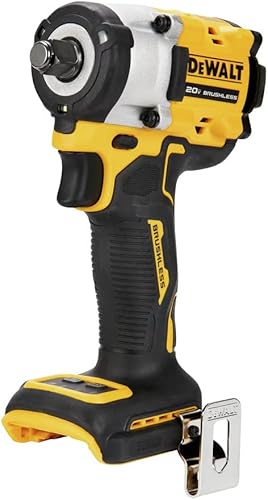
DeWalt DCF921B ATOMIC 1/2 Inch Impact Wrench
Best for compact garage setups - 5
 Check it
Craftsman V20 RP 1/2 Inch Impact Wrench Kit
Best for starting with Craftsman - 6
 Check it
Makita XWT08Z 18V LXT 1/2 Inch Impact Wrench
Best for existing Makita users - 7
 Check it
DeWalt DCF891B 1/2 Inch Hog Ring Impact Wrench
Best for mixed repair work - 8
 Check it
DeWalt DCF892B XR 1/2 Inch Detent Pin Impact Wrench
Best for repeated same-socket work
Which is the best cordless impact wrench for your jobs?
Choose a high-torque wrench for stubborn large fasteners, a compact wrench for crowded access or a mid-range model for mixed repairs. The DCF900B and DCF900P1 are two ways to buy the same wrench, so your battery setup decides between them.
Use the comparison to narrow your choices before reading the individual recommendations. Breakaway torque describes removal output; it is not a setting for tightening a wheel or another critical joint.
| Product | Best for | Drive | Max breakaway torque | Battery package | Our score |
|---|---|---|---|---|---|
| DeWalt DCF900B 1/2 Inch 4-Speed Impact Wrench | demanding garage jobs | 1/2 in | 1,400 ft-lb | Battery and charger sold separately | 9.2 |
| DeWalt DCF900P1 1/2 Inch Impact Wrench Kit | starting with DeWalt | 1/2 in | 1,400 ft-lb | 5.0 Ah battery and charger included | 9.0 |
| Milwaukee M18 FUEL 3/8 Inch Compact Impact Wrench | crowded engine bays | 3/8 in | 250 ft-lb | Battery and charger sold separately | 8.9 |
| DeWalt DCF921B ATOMIC 1/2 Inch Impact Wrench | compact garage setups | 1/2 in | 450 ft-lb | Battery not included | 8.8 |
| Craftsman V20 RP 1/2 Inch Impact Wrench Kit | starting with Craftsman | 1/2 in | 1,000 ft-lb | 4.0 Ah battery and charger included | 8.7 |
| Makita XWT08Z 18V LXT 1/2 Inch Impact Wrench | existing Makita users | 1/2 in | 1,180 ft-lb | Battery and charger sold separately | 8.6 |
| DeWalt DCF891B 1/2 Inch Hog Ring Impact Wrench | mixed repair work | 1/2 in | 800 ft-lb | Battery and charger sold separately | 8.5 |
| DeWalt DCF892B XR 1/2 Inch Detent Pin Impact Wrench | repeated same-socket work | 1/2 in | 800 ft-lb | Battery and charger sold separately | 8.1 |
DeWalt DCF900B 1/2 Inch 4-Speed Impact Wrench: Best for demanding garage jobs
- 1,030 ft-lb max fastening torque
- 1,400 ft-lb max breakaway torque
- 4 speed modes
- Precision Wrench control
Choose this high-torque bare tool for stubborn fasteners if you already use compatible DeWalt batteries. Precision Wrench control helps manage fastening and removal.
Pros
- Joint-highest torque figures in this group
- Variable trigger and selectable modes
- Shock-absorbing battery connection
Cons
- Battery and charger sold separately
- Large high-torque body is less suited to confined work
The DCF900B is the strongest fit here for buyers who regularly face stubborn fasteners and already use DeWalt's battery system. DeWalt rates it for 1,030 ft-lb maximum fastening torque and 1,400 ft-lb maximum breakaway torque, the joint-highest figures in this group.
Its 4-mode switch and variable trigger let you approach different jobs with more control than a single full-output setting. DeWalt's Precision Wrench mode is designed to help prevent overtightening in forward and fastener run-off in reverse.
An LED lights the work area, while the battery guard provides a shock-absorbing connection between the tool and battery. These features suit garage and jobsite use, but neither removes the need to keep the socket square on the fastener.
Skip it for mostly small bolts or crowded repairs. The larger high-torque body is a poor trade if clearance is your main problem, and the DCF900P1 makes more sense if you also need charging equipment.
DeWalt DCF900P1 1/2 Inch Impact Wrench Kit: Best for starting with DeWalt
- 1,030 ft-lb max fastening torque
- 1,400 ft-lb max breakaway torque
- Includes 5.0 Ah battery and charger
- 4 speed modes
Get the DCF900 with a battery and charger if you're building a DeWalt setup for demanding work. Existing battery owners should compare the bare-tool option.
Pros
- Battery and charger included
- Same wrench performance as the DCF900B
- Precision Wrench control
Cons
- High-torque size can limit access
- Included accessories may duplicate your existing setup
The DCF900P1 is the better DCF900 package for someone starting a DeWalt setup. It includes a 5.0 Ah battery and charger, so you do not need to choose those parts separately before putting the wrench to work.
The wrench has the same output and control features as the bare DCF900B. Choose between these two packages by what you already own, rather than expecting the kit version to be a different class of tool.
One included battery gets you started, but it does not provide a charged spare during a long job. For occasional garage work, planning a charging break may be enough; repeated work may call for another compatible pack.
Skip this kit if its accessories duplicate your setup, or if a smaller wrench better matches your repairs. Buying a complete package only helps when the tool itself fits, and you'll still need suitable impact sockets and a torque wrench for final tightening.
Milwaukee M18 FUEL 3/8 Inch Compact Impact Wrench: Best for crowded engine bays
- 4.8 in body length
- Up to 250 ft-lb nut-busting torque
- Tri-LED lighting
- 4-mode DRIVE CONTROL
The short body suits confined fasteners where a larger wrench cannot line up. Choose it for access and controlled removal rather than heavy breakaway work.
Pros
- Short body for confined access
- Lights surround the anvil
- Bolt Removal Control slows rotation after loosening
Cons
- Lower breakaway output than the larger picks
- Battery and charger sold separately
Choose the Milwaukee M18 FUEL compact when reaching the fastener matters more than maximum removal power. Its 4.8 in body helps in crowded work areas, and Milwaukee rates its removal output at up to 250 ft-lb.
The 3/8 in drive suits buyers who already use that socket size for repair work. Tri-LEDs surround the anvil, placing light near the socket rather than relying on one light farther from the fastener.
Its 4-mode DRIVE CONTROL includes an auto shut-off mode that applies no more than 20 ft-lb for hand-tight applications. Bolt Removal Control reduces rotation speed after a bolt loosens, helping you manage the last part of removal.
Skip it as your only wrench for frequent stubborn wheel fasteners or heavy hardware. It needs a separate M18 battery and charger, and our best impact wrenches for lug nuts covers choices aimed more directly at wheel work.
DeWalt DCF921B ATOMIC 1/2 Inch Impact Wrench: Best for compact garage setups
- Up to 300 ft-lb fastening torque
- Up to 450 ft-lb breakaway torque
- 4 speed settings
- Timber screw mode
This compact DeWalt suits buyers who want to keep using their 1/2 in sockets in smaller work areas. It also offers a dedicated timber screw mode.
Pros
- Compact design with a 1/2 in drive
- Hog ring for quick socket changes
- LED brightness control
Cons
- Less removal power than the larger DeWalt picks
- Battery not included
Choose the DCF921B if you want a compact DeWalt while keeping your existing 1/2 in impact sockets. DeWalt rates it for 300 ft-lb fastening torque and 450 ft-lb breakaway torque, placing it below the larger DeWalt choices for difficult removal work.
The hog ring helps with frequent socket changes, and 4 speed settings let you adjust output as the work changes. Precision Wrench control adds help with overtightening and fastener run-off, while the LED offers brightness control.
Timber screw mode gives this wrench another role for suitable wood fastening work. Use the correct socket and follow the fastener's installation instructions, rather than treating the mode as permission to drive every large screw at full output.
Skip it if seized fasteners are your main reason for buying. This tool-only model is better suited to compact access and varied jobs; our cordless impact wrench buying guide explains how drive size and tool size affect that choice.
Craftsman V20 RP 1/2 Inch Impact Wrench Kit: Best for starting with Craftsman
- 700 ft-lb max tightening torque
- 1,000 ft-lb max breakaway torque
- Includes 4.0 Ah battery and charger
- 3 speed settings
This kit brings the wrench, battery, charger and soft bag together for a new V20 setup. It suits garage buyers who need substantial removal power and the charging essentials.
Pros
- Battery, charger and soft bag included
- Variable trigger alongside selectable speeds
- Hog ring for socket changes
Cons
- Fewer preset speeds than the 4-mode picks
- Power accessories may duplicate tools you own
The Craftsman V20 RP kit suits someone building a garage setup who wants substantial removal output and the charging essentials together. It includes a 4.0 Ah battery, charger and soft bag, rather than leaving those items to a separate order.
Craftsman rates the wrench for 700 ft-lb maximum tightening torque and 1,000 ft-lb maximum breakaway torque. Its 3 speed settings and variable trigger give you ways to approach smaller work without going straight to full output.
A hog ring supports socket changes, and the LED helps illuminate the fastener. The bag also gives you a place to keep the wrench and power accessories together between jobs.
Skip this kit if you already have another battery platform that covers your needs. Starting a second system adds another charger and battery to manage, so choose Craftsman because the whole setup suits your work, not simply because accessories come in the box.
Makita XWT08Z 18V LXT 1/2 Inch Impact Wrench: Best for existing Makita users
- 740 ft-lb fastening torque
- 1,180 ft-lb nut-busting torque
- 3-speed power selection
- Friction ring anvil
Choose this high-torque bare tool if you already use Makita 18V LXT batteries and need help with stubborn fasteners. Its size makes access a key buying check.
Pros
- High breakaway output
- Selectable speed ranges
- Friction ring for quick socket changes
Cons
- Battery and charger sold separately
- Large body is less suited to confined spaces
The Makita XWT08Z is a sensible high-torque choice for buyers already using 18V LXT batteries. Makita rates it for 740 ft-lb fastening torque and 1,180 ft-lb nut-busting torque, giving existing LXT users an option for demanding removal work.
Its 3-speed selection switch provides distinct output ranges, while the friction ring supports quick socket changes. This combination suits work that moves between socket sizes but still calls for a larger wrench.
At 10 in long, it needs room behind the socket. Check that space around your regular jobs, especially if a nearby frame rail, bracket or pipe limits how squarely you can hold the tool.
Skip it when confined access is the main buying reason, or when you need a kit with charging equipment included. If socket retention is still undecided, our guide to friction ring vs pin detent anvils explains how each style changes your workflow.
DeWalt DCF891B 1/2 Inch Hog Ring Impact Wrench: Best for mixed repair work
- 600 ft-lb max fastening torque
- 800 ft-lb max breakaway torque
- 4 speed settings
- Hog ring anvil
This mid-range DeWalt is a useful middle choice for varied repairs when compact-model output is limiting. Its hog ring suits frequent socket changes.
Pros
- More output than the compact DCF921B
- Precision Wrench control
- LED work light
Cons
- Battery and charger sold separately
- Less removal power than the DCF900
The DCF891B is the DeWalt to consider for mixed repair work when you want more output than the compact DCF921B without choosing the DCF900. DeWalt rates it for 600 ft-lb maximum fastening torque and 800 ft-lb maximum breakaway torque.
Its hog ring suits repairs that require several socket sizes. Four speed settings, a variable trigger and Precision Wrench control let you adjust your approach as you move from removal to assembly.
This is a useful middle choice for someone who wants one wrench for varied jobs rather than a dedicated compact or high-torque tool. The LED helps in dim areas, and the included belt clip offers another way to carry it between tasks.
Skip it if your work regularly demands the DCF900's higher removal output. Also compare the DCF892B if you tend to leave one socket attached, since socket retention is the main reason to choose between these two mid-range models.
DeWalt DCF892B XR 1/2 Inch Detent Pin Impact Wrench: Best for repeated same-socket work
- 600 ft-lb max fastening torque
- 800 ft-lb max breakaway torque
- 4 speed settings
- Detent pin anvil
Choose this alternative to the DCF891B when you prefer a detent pin for socket retention. It fits work where the same socket stays attached through several fasteners.
Pros
- Detent pin socket retention
- Variable trigger and selectable modes
- Precision Wrench control
Cons
- Battery and charger sold separately
- Socket changes can take more effort than with a hog ring
Choose the DCF892B when you want the DCF891B's mid-range capability with detent pin socket retention. It shares that model's torque figures and uses the same number of speed settings, so this decision centers on how you change sockets.
A detent pin can suit repeated work where one socket stays attached across several fasteners. Depending on the socket and pin arrangement, releasing it can take more effort than pulling a socket from a hog ring.
Precision Wrench control, the variable trigger and an LED support the same general repair role as the DCF891B. Battery and charger are separate, making this a more natural addition to an existing DeWalt setup.
Skip it if you swap sockets constantly and value quick changes most. Before starting work, learn how your socket engages and releases from the pin so you do not end up struggling with the connection in a cramped spot.
How should you choose a cordless impact wrench?
Choose by regular workload, access and battery compatibility, then compare controls and socket retention. Start with the jobs you expect to repeat, rather than choosing around the single hardest bolt you might meet someday.
What makes the best cordless impact wrench for your workload?
The right wrench handles your common jobs without making every repair awkward. Write down the fastener sizes, socket sizes and working positions you use most, then decide whether removal power or access causes more trouble.
A compact wrench makes sense for crowded assemblies and repeated smaller fasteners. A high-torque wrench earns its place when stubborn large hardware is common; a mid-range wrench is a practical compromise for a varied repair schedule.
What drive size should your cordless impact wrench have?
Choose a drive that matches suitable impact-rated sockets for your work. A 1/2 in drive is common among the heavier options here, while the Milwaukee uses a 3/8 in drive.
Adapters add length and another connection, which can defeat the reason for buying a compact tool. Our 1/2 in vs 3/8 in impact wrench guide helps you choose around your socket set and regular tasks.
How much torque do you need?
Choose enough removal output for your regular fasteners, with room for more difficult conditions. A fastener's specified installation torque does not tell you exactly how much effort it will take to remove after corrosion or previous overtightening.
Maximum fastening and breakaway figures describe different tasks. They also do not promise that every fastener below that number will come free, since battery condition, socket connections and the joint itself affect the result.
How much clearance does the whole setup need?
Allow room for the wrench, battery, socket and your hand. Tool body length alone cannot show whether the assembled setup will fit behind a fastener or clear an adjacent part.
Measure the space around the jobs that prompted the purchase. A deep socket or extension may solve one access problem while creating another, so plan a straight approach rather than relying on a socket held at an angle.
Do you need a kit or a bare tool?
Choose a bare tool when you already own compatible batteries and a charger that suit the wrench. Choose a kit when you need those essentials and want to keep the purchase simple.
Battery families are not interchangeable just because their voltage labels look similar. Amp-hour capacity also does not directly translate into torque, so follow the tool maker's battery guidance rather than assuming any pack gives the same result.
Which anvil style is right for you?
Choose a hog ring or friction ring for frequent socket changes, or a detent pin when you prefer its retention method. The choice affects your workflow more than the fastener's tightening requirement.
Read our friction ring vs pin detent comparison if you're undecided. With either style, seat the socket fully and confirm that it stays attached before bringing the tool to the work.
How do you set up a cordless impact wrench for the first job?
Start with a charged compatible battery, the correct impact socket and a clear approach to the fastener. Remove the battery while fitting accessories or checking the anvil, then reconnect it when you're ready to work.
Use impact-rated sockets and accessories that fit the fastener closely. Ordinary chrome hand sockets are not intended for repeated impact loads, and a worn or wrong-size socket can damage the fastener.
Inspect the socket for cracks and the fastener for rounded edges before applying power. Keep extensions and adapters to those needed for access, and make sure every connection is fully seated.
Check the direction switch before touching the trigger. Begin with a lower output setting for assembly, and keep the tool aligned with the fastener rather than pushing sideways to make it reach.
Support loose parts before removing the final bolt. Once the threads disengage, a bracket or other component can shift even if an automatic removal mode slows the tool.
Wear eye and hearing protection, keep loose clothing clear and position yourself to control the wrench. Our guide to using a cordless impact wrench walks through the basic sequence.
Can you use an impact wrench to tighten lug nuts?
Yes, but start lug nuts by hand and finish with a torque wrench at the vehicle maker's specified value. An impact wrench's maximum output or control mode cannot confirm the final torque on a wheel.
Follow the vehicle's lifting, support and wheel-service instructions before removing anything. Keep the socket fully seated, and support it as needed so the tool's weight does not pull it sideways against the lug nut.
During installation, hand-start every lug nut and seat the wheel using the prescribed sequence. If you use the impact for initial snugging, stop before final tightening and complete the job with the torque wrench.
For tool selection, read the torque needed for lug nuts. For the removal sequence, use how to remove lug nuts with an impact wrench.
What mistakes make an impact wrench less useful?
The most common mistakes are using full output too early, forcing poor socket alignment and expecting an automatic mode to measure final torque. Good controls help only when you choose the right setting and stop at the right point.
Do not use the wrench to start threads. If a bolt will not turn freely by hand at the start, back it out and check alignment instead of powering through resistance.
Do not keep hammering indefinitely on a fastener that is not moving. Stop, check direction, battery charge and socket fit, then assess whether corrosion, damaged hardware or another removal method needs attention.
Avoid using the highest setting simply because it is available. Small fasteners, thin brackets and delicate assemblies need a different approach from stubborn wheel hardware, and some work is better done with hand tools.
Do not assume a wrench replaces every other fastening tool. Our impact wrench vs impact driver guide explains why a square-drive wrench and a screw-driving tool serve different jobs.
How should you care for the wrench and battery?
Keep the vents, battery connection and socket-retention parts clean, and follow the maker's care instructions. Remove the battery before cleaning or checking the tool.
Wipe away dirt after use instead of soaking the housing with cleaner. Resistance to some oils or solvents does not mean every chemical is safe, and spraying cleaner into vents can carry debris inside.
Check sockets, extensions and the anvil for damage as part of your routine. Replace cracked accessories and stop using the wrench if the socket no longer stays attached as it should.
Let an overheated tool or battery cool according to its instructions, and store the battery away from excessive heat and moisture. Keep charging equipment in a dry location and use the charger intended for that battery system.
Which best cordless impact wrench should you buy?
Choose the DCF900B for frequent demanding removal work if you already have DeWalt power accessories, or the DCF900P1 if you need them included. Existing Makita users should weigh the XWT08Z before adding a second battery platform.
For mixed repairs, choose the DCF891B when you change sockets often or the DCF892B when you prefer detent pin retention. Choose the Milwaukee for crowded access, the DCF921B for compact work with 1/2 in sockets or the Craftsman kit for a new V20 setup.
The best cordless impact wrench is the one that fits your regular work with the fewest compromises. Before ordering, confirm battery compatibility, socket fit and access, then read impact wrench vs torque wrench to plan how you'll finish critical fasteners correctly.
Our top 3 picks at a glance
-
1
Best for demanding garage jobs
DeWalt DCF900B 1/2 Inch 4-Speed Impact Wrench
9.2/10 our score
See it on Amazon -
2
Best for starting with DeWalt
DeWalt DCF900P1 1/2 Inch Impact Wrench Kit
9.0/10 our score
See it on Amazon -
3
Best for crowded engine bays
Milwaukee M18 FUEL 3/8 Inch Compact Impact Wrench
8.9/10 our score
See it on Amazon
Frequently asked questions
What is the best cordless impact wrench for most people?
The best cordless impact wrench matches your regular jobs: choose the DCF900B for demanding removal work, the DCF891B for mixed repairs or the Milwaukee for confined access. Start with your existing battery platform, then choose the smallest tool that offers enough output for the fasteners you regularly handle.
Is a 1/2-inch cordless impact wrench better than a 3/8-inch model?
A 1/2 in model suits larger sockets and heavier work, while a compact 3/8 in model can make crowded repairs easier. Drive size does not determine the tool's output or overall fit, so compare torque, body clearance and the space needed for your socket before choosing.
Do cordless impact wrenches include a battery and charger?
Only some cordless impact wrenches include a battery and charger: the DCF900P1 and Craftsman CMCF940M1 are the kits in this group. A bare tool makes sense when you already have compatible power accessories, but a first-time buyer should account for the wrench, battery, charger and impact-rated sockets.
Can I use an impact wrench to tighten lug nuts?
Yes, but start lug nuts by hand and use a torque wrench for final tightening to the vehicle maker's specification. Follow the vehicle's wheel-service instructions and our guide to removing lug nuts with an impact wrench, since a maximum output figure or automatic mode cannot confirm final clamp torque.


