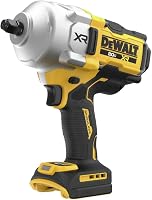
DeWalt DCF900 vs DCF961: Which Impact Wrench Wins? (October 2026)
In the DeWalt DCF900 vs DCF961 choice, pick the DCF900 for general heavy fastening or the DCF961 when stubborn fasteners drive your buying decision. Choose the DCF900P1 if you also need a battery and charger.
On this page (10 sections)
- DeWalt DCF900 vs DCF961: which should you choose?
- Which wrench has more torque for stubborn fasteners?
- Who should buy the DCF900, and who should skip it?
- Who should buy the DCF961, and who should skip it?
- How do the DCF900 and DCF961 controls compare?
- What should you check before buying either wrench?
- How should you set up either wrench for a job?
- Is either model the better choice for lug nuts?
- What mistakes and care habits matter most?
- Which DeWalt impact wrench is the better buy for your work?
DeWalt DCF900 vs DCF961: which should you choose?
For DeWalt DCF900 vs DCF961, choose the DCF900 for general heavy fastening and the DCF961 when stubborn, large fasteners are the main job. Pick the DCF900P1 package if you need a battery and charger.
The DCF900B and DCF900P1 contain the same wrench, so this is a choice between 2 tools and 3 packages. Buying the P1 kit changes what arrives in the box, not the wrench's stated torque.
Start with the work you do most often. A tool chosen around an occasional seized bolt can be a poor fit for daily work on smaller fasteners or in tight spaces.
 Best for equipped DeWalt users
DeWalt DCF900B 1/2 Inch 4-Speed Impact Wrench
 Best for new cordless users
DeWalt DCF900P1 1/2 Inch Impact Wrench Kit
DeWalt DCF900 vs DCF961 at a glance
The DCF961 leads on stated maximum torque; the DCF900 offers a ready-to-start kit option among these choices. Both provide control modes for managing fastening and loosening.
| Product | Best for | Max fastening torque | Max breakaway torque | Control modes | Our score |
|---|---|---|---|---|---|
| DeWalt DCF900B 1/2 Inch 4-Speed Impact Wrench | equipped DeWalt users | 1,030 ft-lb | 1,400 ft-lb | 4 | 9.2 |
| DeWalt DCF900P1 1/2 Inch Impact Wrench Kit | new cordless users | 1,030 ft-lb | 1,400 ft-lb | 9.0 | |
| DeWalt DCF961B 1/2 Inch High Torque Impact Wrench | stubborn heavy fasteners | 1,320 ft-lb | 1,900 ft-lb | 8.0 |
If you're comparing other models in the brand's lineup, see our guide to the best DeWalt impact wrenches. For a broader brand comparison, read DeWalt vs Milwaukee impact wrenches.
Which wrench has more torque for stubborn fasteners?
The DCF961 has the higher stated maximum torque, making it the better choice when heavy fastener removal drives the purchase. DeWalt rates it at 1,320 ft-lb maximum fastening torque and 1,900 ft-lb maximum breakaway torque.
The DCF900's corresponding figures are 1,030 ft-lb and 1,400 ft-lb. Both belong on the shortlist for demanding work, but the DCF961 provides more stated capacity for jobs where loosening is the main concern.
Breakaway torque matters most for removal, while fastening torque describes tightening capability. Neither number tells you the correct torque for a specific bolt or how long a rusted joint will take to release.
Rust, damaged threads, prior overtightening, and the socket setup can change the result. Don't turn the gap between maximum figures into a promise that the DCF961 will remove every fastener the DCF900 cannot.
DeWalt says the DCF961 automatically increases power after 4 seconds of impacting to help loosen stubborn fasteners. That feature suits difficult removal work, but it isn't a reason to keep hammering on a damaged fastener.
For wheel work, the vehicle's required tightening value remains the target. Our guide to impact wrench vs torque wrench for wheels explains why removal power and final tightening need different tools.
Who should buy the DCF900, and who should skip it?
The DCF900 suits buyers who need a high-torque wrench for varied heavy jobs rather than choosing solely for the highest available torque. DeWalt describes uses including wheel lugs, large pipe flanges, grooved couplings, and concrete anchor bolt setting.
That makes it a sensible starting point for a garage or worksite with both removal and fastening tasks. Choose it because those tasks match your work, not because every fastener needs its full output.
Choose the DCF900B for an existing battery setup
The DCF900B makes sense when you already have a compatible battery and charger available for the job. Its bare-tool package avoids adding charging equipment you don't need.
Check availability as well as compatibility. A battery that spends the day in another essential tool may leave your new wrench waiting when you need both tools at once.
Choose the DCF900P1 to start with a kit
The DCF900P1 includes a 5.0 Ah battery, charger, and kit bag. It's the clearer choice among these packages if you're starting without compatible battery equipment.
A single included battery doesn't establish how long your work session will last. Plan charging around your workload, and decide whether you need a spare based on how costly a pause would be.
Skip the DCF900 when access is the main problem
Skip it as your first choice for small hardware, cramped engine bays, or frequent overhead work. A high-torque wrench can solve a force problem while leaving an access problem untouched.
If most jobs involve reaching around nearby parts, compare compact impact wrenches before committing to either model here. Socket access and room to hold the tool square matter more than unused torque.
Who should buy the DCF961, and who should skip it?
The DCF961 suits buyers whose regular work centers on stubborn, heavy fasteners. Its higher maximum output is the reason to choose it over the DCF900.
Large wheel lugs and pipe flanges are among DeWalt's stated uses. Buyers doing that kind of work repeatedly have a clearer reason to prioritize extra loosening capacity than someone doing occasional routine wheel service.
Choose the DCF961B if you can point to a recurring task that calls for this capability. An existing compatible battery setup also makes its bare-tool package easier to fit into your equipment.
Skip it for light fastening or torque bragging rights. Extra maximum output doesn't make small bolts safer to tighten, improve socket clearance, or replace careful trigger control.
Also skip a tool-only order if you need a complete setup immediately and haven't arranged the battery and charger. Confirm the whole working setup before choosing based on the wrench alone.
If you already have a DCF900, a difficult bolt deserves a diagnosis before an upgrade. A slipping socket, damaged head, or poor approach angle calls for a better setup or another removal method.
How do the DCF900 and DCF961 controls compare?
Both tools offer four control modes overall, so mode count doesn't give the DCF900 an advantage. The DCF900 has a four-mode layout and variable speed trigger; the DCF961 has three speed settings plus Precision Wrench mode.
DeWalt says Precision Wrench control helps prevent overtightening in forward and fastener run-off in reverse. Use it as a control aid, especially when you need to manage what happens as a fastener begins to move.
Run-off matters when a nut suddenly spins free. Keep loose hardware from falling into machinery, and keep your free hand clear of the socket and moving parts.
Start with a lower setting when running hardware down, then increase only as the job requires. Jumping straight to maximum output can damage threads before you notice that the fastener started crooked.
Both models include an LED work light with brightness adjustment. Use it to inspect the fastener and socket engagement, but add separate lighting when the tool or your hand blocks the joint.
Precision Wrench mode is not a torque setting. Critical joints still need the specified fastening process, which may include a torque wrench, an angle step, or replacement hardware.
What should you check before buying either wrench?
Check battery compatibility, socket access, and your complete tool setup before ordering. These details decide whether a powerful wrench will be useful on the day it arrives.
The DCF900B and DCF961B are bare tools with batteries and chargers sold separately. Match battery and charger compatibility to the exact model instructions rather than assuming any cordless battery will fit.
Both models measure 8.43 inches long, but that doesn't represent the full working space needed. Add the socket, any necessary extension, and room to keep the tool aligned with the fastener.
The DCF900B has a stated weight of 6.4 lb. There's no comparable DCF961B working-weight figure here, so a weight-based winner isn't justified.
Don't compare the DCF900P1's 11 lb kit figure directly with the bare wrench's weight. For repeated or overhead work, assess the assembled tool with the battery and socket you plan to use.
The DCF900B and DCF961B both have hog ring anvils. Our guide to friction ring vs pin detent explains socket retention if you're moving from a different setup.
Include impact-rated sockets and a suitable final-tightening tool in your equipment plan. The cordless impact wrench buying guide covers how the wrench, battery, and accessories fit together.
How should you set up either wrench for a job?
Begin with a sound fastener, the correct impact-rated socket, and a stable working position. Power is useful only when the socket stays fully engaged and the work is properly supported.
Remove the battery before inspecting the anvil, fitting accessories, or clearing a problem. Check the socket for cracks or wear, then make sure it seats securely on the tool.
Use the exact socket size, preferably a six-point socket for heavy hex fasteners where suitable. A loose fit can round the fastener head and make removal harder.
Keep extensions and adapters to what the access requires. Extra connections can reduce useful output at the fastener and introduce more movement, so use a direct setup when space allows.
For loosening, hold the wrench square to the fastener and maintain firm socket engagement. Work in controlled bursts, stopping to inspect if the socket slips or the fastener head begins to deform.
For tightening, start the threads by hand and confirm the joint is seated correctly. Use controlled run-down, then complete the joint's specified tightening procedure.
For anchor bolts or other specialized joints, follow the hardware manufacturer's instructions on impact-tool use. A wrench being suited to heavy fastening doesn't mean every anchor or bolt accepts the same installation method.
Is either model the better choice for lug nuts?
The DCF900 is the more natural starting point for routine wheel service; choose the DCF961 when stubborn removal work is a recurring need. Both are described by DeWalt for wheel lugs.
Before work begins, identify the vehicle's torque specification, socket size, lifting points, and service procedure. Support the vehicle correctly before wheel removal and never rely on a jack alone.
Keep the socket straight and fully seated, especially with recessed nuts or limited wheel clearance. If a socket binds against the wheel or doesn't reach properly, fix the fit before applying power.
During installation, start each nut by hand and follow the required tightening sequence. Avoid driving a nut hard against the wheel with the impact, since a later torque-wrench check cannot undo prior overtightening.
Stop if a nut resists from the first turn or feels crossed. More torque can turn a threading problem into a damaged stud.
Our guide to removing lug nuts with an impact wrench covers the process. For choosing a drive size for your broader workload, read what size impact wrench you need.
What mistakes and care habits matter most?
Avoid using maximum power as the default, and keep the socket, anvil, and battery connection in good condition. Those habits protect the work and help prevent avoidable interruptions.
Don't use the impact to pull misaligned parts together. Align and support the joint first, because force can hide a fit problem until threads or parts are damaged.
Don't keep hammering indefinitely on a fastener that won't move. Pause to check direction, socket fit, thread condition, and the service procedure before choosing another removal approach.
If you use penetrating oil, follow its directions and the joint's service requirements. Don't assume lubrication is acceptable during reassembly, since tightening specifications may call for dry threads.
After work, remove the battery and wipe away dirt and oil. Keep vents clear, avoid soaking the tool, and follow DeWalt's cleaning guidance for the housing and battery contacts.
The DCF900 includes a shock-absorbing battery connection designed to reduce wear at that joint. It still pays to inspect the battery latch and stop using damaged equipment.
Store the wrench and sockets dry, and check socket retention if accessories no longer stay secure. Let hot equipment cool as directed rather than repeatedly pushing through heat-related interruptions.
Which DeWalt impact wrench is the better buy for your work?
The DeWalt DCF900 vs DCF961 decision comes down to recurring jobs and the equipment you already have. Match the wrench to those needs before choosing by maximum output.
- Choose the DCF900B for varied heavy work when compatible batteries and a charger are already available.
- Choose the DCF900P1 for the same wrench with the battery equipment needed to start.
- Choose the DCF961B when stubborn, large fastener removal is a regular part of your work.
- Skip both as a first choice when small fasteners, tight access, or overhead handling dominate your day.
Before ordering, name the job, check socket clearance, and account for the battery, charger, and final-tightening tools. Compare the DCF900 review and DCF961 review for a closer look at the model that fits.
Frequently asked questions
Is the DeWalt DCF961 stronger than the DCF900?
Yes, DeWalt rates the DCF961 at 1,320 ft-lb maximum fastening torque and 1,900 ft-lb maximum breakaway torque, versus 1,030 and 1,400 ft-lb for the DCF900. That makes the DCF961 the stronger choice by stated maximums, though fastener condition, socket setup, and battery condition affect a specific job.
Does the DCF900 or DCF961 come with a battery?
The DCF900P1 includes a 5.0 Ah battery, charger, and kit bag; the DCF900B and DCF961B are bare tools with batteries and chargers sold separately. Choose the P1 package if you need those components, or confirm compatibility with your existing equipment before buying either bare tool.
Which has more speed settings, the DCF900 or DCF961?
Both have four control modes overall; the DCF900 uses a four-mode layout, while the DCF961 has three speed settings plus Precision Wrench mode. Don't mistake three speeds for three total modes, and don't treat either tool's mode selection as a calibrated final torque setting.
Can either wrench tighten lug nuts to the right torque?
Neither replaces a calibrated torque wrench for final lug nut tightening. Start the nuts by hand, follow the vehicle's tightening sequence, and use the impact only for controlled run-down if the service procedure allows it; finish with a torque wrench set to the vehicle's specified value.