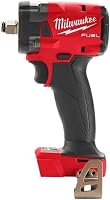
Milwaukee 2767-20 Impact Wrench Review: Worth It? (October 2026)
The Milwaukee 2767-20 suits demanding removal and fastening jobs, especially if you already use M18 batteries. Choose a lighter mid-torque or compact wrench when routine work, overhead handling or tight access matters more than high torque.
On this page (9 sections)
- What does the Milwaukee 2767-20 offer?
- How much of its torque will you actually need?
- Is the friction ring useful for frequent socket changes?
- Which alternative fits your work better?
- Will the assembled wrench fit your workspace?
- What should you have ready before the first job?
- How should you remove and reinstall fasteners?
- What mistakes shorten useful tool life?
- Should you choose the Milwaukee 2767-20?
The Milwaukee 2767-20 is a strong fit for demanding fasteners, especially if you already use M18 batteries and have room for a full-size wrench. For routine garage work, a lighter model may serve you better.
Buy it to solve a recurring removal problem, not simply to own the highest torque figure. A wrench that reaches the fastener and stays easy to support can be more useful than extra power you rarely need.
What does the Milwaukee 2767-20 offer?
The 2767-20 combines high stated torque, a brushless motor and quick socket changes. Its main trade-off is the size and weight you must handle to get those benefits.
Milwaukee 2767-20 M18 FUEL 1/2 Inch High Torque Wrench: Best for demanding removal jobs

- 1,000 ft-lb fastening torque
- 1,400 ft-lb nut-busting torque
- 1/2 in friction ring
- 6 lb weight
Choose this high-torque wrench for demanding fasteners where you have room to work. Its bare-tool format suits buyers who already have an M18 battery and charger.
Pros
- High stated fastening and removal torque
- Friction ring allows quick socket changes
- Works with all M18 batteries
Cons
- Battery is not included
- Weight and length can hinder overhead or crowded work
Milwaukee states that its POWERSTATE brushless motor delivers 1,000 ft-lb of fastening torque and 1,400 ft-lb of nut-busting torque. Those figures make demanding automotive, construction and industrial fastening its intended territory.
The body measures 9.65 in long and weighs 6 lb. Add your battery and socket when judging the complete setup, including the space needed behind the handle.
Milwaukee says its REDLINK PLUS electronics help protect the tool and battery against overload and overheating. Those protections support the tool during hard work, but you still need to stop when a fastener or tool shows a problem.
Who should buy the Milwaukee 2767-20?
Choose it if stubborn, accessible fasteners are a regular part of your work. Existing M18 users have a clear reason to consider the bare tool because it works with all M18 batteries.
It also makes sense as a second wrench beside a smaller tool. Use the smaller wrench for easier access and routine removal, then bring out the high-torque model when the job calls for it.
Skip it as your first choice if you mainly handle small fasteners, work overhead or reach into crowded assemblies. Our guide to the best Milwaukee impact wrenches compares options for those different needs.
How much of its torque will you actually need?
Choose torque capacity around your hardest recurring job, rather than an unusual bolt you might meet once. Removal demands depend on corrosion, thread condition, previous tightening and the fastener itself.
Fastening torque describes tightening output, while nut-busting torque describes removal capability. Neither number tells you how long to hold the trigger or what torque a particular joint needs.
For occasional tire changes, a high-torque wrench may add weight without solving a frequent problem. For repeated work on seized or heavily tightened hardware, its output has a clearer purpose, provided the fastener can safely withstand removal.
Our guide to how much torque an impact wrench needs for lug nuts explains that choice in more detail. Wheel removal capacity and the correct installation torque are separate decisions.
More force is also the wrong answer to a rounded nut, damaged socket or socket sitting at an angle. Fix the engagement problem before applying more impacts.
Is the friction ring useful for frequent socket changes?
The 1/2 in friction ring suits jobs that involve switching socket sizes. It holds the socket on the anvil without requiring a separate release button.
Milwaukee describes the design as allowing quick one-handed changes. In practice, socket fit and the condition of the socket and ring affect how much effort removal takes.
Seat each socket fully before starting, and check retention with the tool stopped. A socket that slips off too easily or no longer seats properly needs attention before you continue.
Choose compatible, impact-rated sockets rather than standard hand sockets. Follow the tool instructions for accessory changes and remove the battery before inspecting the anvil or retention ring.
Our friction ring versus pin detent guide helps if your work calls for a different balance between easy changes and socket retention.
Which alternative fits your work better?
Choose an alternative when handling, access or an existing battery system matters more than the 2767-20's output. These four tools solve different buying problems.
| Model | Main reason to choose it | Main reason to skip it |
|---|---|---|
| Milwaukee 2767-20 | Demanding removal in the M18 system | Frequent overhead or crowded work |
| Makita XWT08Z | High torque with three speed settings | You want a lighter wrench |
| Milwaukee 2962-20 | Lighter handling with fastening controls | Your main need is high-torque removal |
| Milwaukee 2855-20 | Short body for restricted access | Stubborn fasteners drive the purchase |
Makita XWT08Z: choose it for an existing LXT setup
The XWT08Z suits buyers already using Makita 18V LXT batteries who want a high-torque wrench with three speed settings. Makita states 740 ft-lb of fastening torque and 1,180 ft-lb of nut-busting torque.
Its speed selection lets you choose the working pace before approaching a fastener. That helps you adjust how you work, though speed selection does not measure the torque delivered to a joint.
At 7 lb, it is heavier than the 2767-20. Skip it if reducing fatigue is the reason you are shopping, and account for the separately sold battery and charger if you are new to LXT.
Milwaukee 2962-20: choose it for routine handling
The 2962-20 is the more sensible starting point when lower weight and control features guide your purchase. It weighs 3.9 lb and includes three LEDs to light the work area.
Its auto shut-off control applies no more than 35 ft-lb in hand-tight fastening mode. That figure describes one mode, not the wrench's maximum output, and it is not a universal safe setting for small fasteners.
Bolt removal control delivers full output, then reduces RPM once the bolt loosens. That feature suits jobs where you want less free spinning after the fastener breaks loose.
Skip this choice if your main reason for buying is the high-torque capability described for the 2767-20. A lighter tool only helps if it meets the work you need it to do.
Milwaukee 2855-20: choose it when access comes first
The 2855-20 suits crowded spaces and repeated repositioning, with a 4.9 in body and 2.4 lb weight. Its three LEDs help illuminate the socket area.
It also has automatic shut-off and a bolt removal mode that slows rotation after loosening. Choose it when access is the limiting factor, and skip it when demanding removal is your main goal.
A shorter body does not remove the need to check the whole assembly. A deep socket, extension or battery can still block access even when the wrench body fits.
Will the assembled wrench fit your workspace?
Check socket alignment and clearance before choosing the 2767-20. Body length alone cannot tell you whether the tool will reach a particular fastener.
Measure the approach from the fastener outward, allowing for the socket and space behind the tool. Also check whether nearby parts leave room for your hand and battery.
The socket should sit squarely on the fastener without forcing the tool against another component. If you must tilt the wrench to make it fit, choose a different approach or tool.
Handling matters most when you support the wrench away from your body or above shoulder height. Plan stable footing and a supported work position rather than assuming extra torque will shorten every job enough to offset the weight.
If smaller fasteners dominate your work, our 1/2 in versus 3/8 in impact wrench guide explains when a different drive size makes sense.
What should you have ready before the first job?
Have a compatible battery, charger and suitable impact sockets ready before buying the bare tool. For wheel installation, include a torque wrench in the setup.
Check socket sizes against the fasteners you actually handle. Choose enough socket depth to engage fully, while avoiding unnecessary length that reduces clearance.
For vehicle work, secure the vehicle according to its instructions before removing parts. Wear eye and hearing protection, and keep loose clothing clear of rotating accessories.
Check the battery connection, socket condition and direction of rotation before pulling the trigger. Start with the socket fully seated and keep the tool aligned as the fastener moves.
If you are still choosing your first battery system, our cordless impact wrench buying guide explains how tool size, drive and battery needs fit together.
An impact wrench also serves a different role from an impact driver. Read impact wrench versus impact driver if your main work involves driving screws rather than turning nuts and bolts.
How should you remove and reinstall fasteners?
Use the impact wrench to speed removal and controlled run-down, then follow the joint's required tightening procedure. Do not use trigger time as a substitute for torque measurement.
For removal, engage the socket fully before applying short bursts. Keep your hands clear of pinch points and be ready for the fastener to release.
If repeated bursts produce no movement, stop and inspect the situation. Check direction, socket engagement, battery charge and signs of damaged hardware instead of continuing until something fails.
For installation, start threads by hand so you can feel cross-threading before power makes the damage worse. Avoid using the wrench to pull misaligned parts together.
On wheels, follow the vehicle maker's tightening order and finish with a calibrated torque wrench. Fastener lubrication also changes tightening conditions, so follow the specified procedure rather than adding lubricant by habit.
Our guide to using a cordless impact wrench covers the full sequence for readers building their first setup.
What mistakes shorten useful tool life?
Avoid blocked vents, damaged sockets and repeated impacts against a fastener that will not move. Basic checks help protect both the wrench and the work.
Remove the battery before cleaning or inspecting the tool. Wipe away dirt, keep ventilation openings clear and follow the manual's cleaning instructions.
Inspect sockets for cracks, wear or rounded contact surfaces. Replace damaged accessories rather than trying to compensate with more trigger pressure.
Stop if the tool or battery shows unusual heat or repeated shutdowns. Let components cool and check the cause before returning to the job.
Do not add oil or grease to the anvil or internal mechanism unless the maintenance instructions call for it. Store the tool and battery in a dry place, and follow battery guidance for charging and storage.
Should you choose the Milwaukee 2767-20?
Buy the Milwaukee 2767-20 for recurring demanding fasteners when your workspace allows a full-size wrench. It is especially easy to justify if you already have the M18 battery and charging setup.
Choose the 2962-20 for routine handling and its control modes, or the 2855-20 when reaching the fastener is the harder problem. Choose the Makita XWT08Z if LXT batteries and adjustable speed are stronger reasons to stay with Makita.
Before ordering, check one representative difficult job: socket fit, approach clearance and how you will support the tool. Those details make the decision more useful than comparing torque figures alone.
If you are also choosing a battery platform, read DeWalt versus Milwaukee impact wrenches before committing to the rest of your setup.
Frequently asked questions
How much torque does the Milwaukee 2767-20 have?
Milwaukee states 1,000 ft-lb of fastening torque and 1,400 ft-lb of nut-busting torque for the 2767-20. These describe different tasks and are not selectable tightening targets.
For wheel installation, follow the vehicle maker's procedure and use a calibrated torque wrench to reach the required final torque.
Does the Milwaukee 2767-20 come with a battery?
No. The Milwaukee 2767-20 comes as a bare tool, without a battery included, and works with all M18 batteries.
Before buying, account for a compatible battery and charger in your setup.
Battery size also affects how the assembled tool fits around nearby parts and feels during use.
Is the Milwaukee 2767-20 good for lug nuts?
The 2767-20 suits demanding lug-nut removal when you can fit the tool and socket squarely onto the nut. Corrosion and previous overtightening can still make removal difficult.
For installation, hand-start the nuts and finish with a torque wrench.
Follow our guide to removing lug nuts with an impact wrench.
What is the difference between the 2767-20 and 2962-20?
The 2767-20 emphasizes high torque, while the lighter 2962-20 adds auto shut-off and bolt removal controls. Choose between them by your hardest recurring jobs and how much handling matters.
The 2962-20's 35 ft-lb auto shut-off limit applies to its hand-tight fastening mode, not its maximum output.